Suwan Kuha Temple: What's so attractive about it and what to keep in mind when visiting
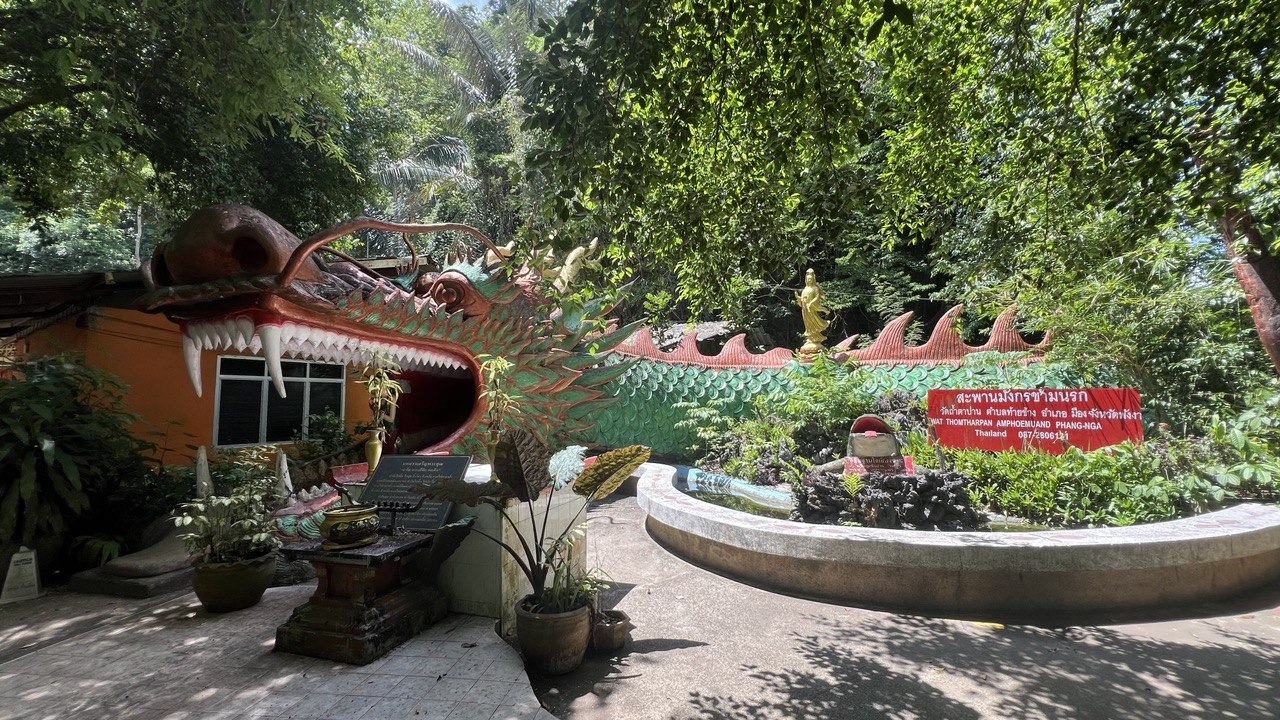
In Phang Nga, a province bordering Phuket, lies a unique Buddhist temple. Over the years of tourism, this location has become one of the most popular stops on land-based excursions. Tourists from all corners of the globe know the temple by many different names, but the most common are Wat Suwan Khuha, Monkey Mountain, and Wat Tham (Cave Temple).
The Monkey Sanctuary
Wild monkeys can be found around the temple grounds and inside the cave. The animals can be fed fruit or nuts sold right there. The inhabitants of this place remain wild and protect their home, so it is important to follow safety precautions and avoid provoking them. The animals can also transmit dangerous diseases through bites or saliva.
- Do not provoke the primates
- Do not sit next to them (this may provoke rivalry)
- Do not touch or pick up monkeys (especially babies)
- Do not argue with the animals, even over food or personal belongings
- Do not push away a macaque if it climbs onto your shoulders—instead, stand up or turn around carefully; it will become uncomfortable and jump down
- Keep children away from wild monkeys (the animals may perceive them as a threat and attack)
- Avoid smiling with your teeth showing (in the animal kingdom, this is a sign of aggression)

If you are bitten, seek medical attention immediately. It is also worth checking in advance that animal attacks are covered by your insurance. If they are not, it is recommended that you extend your coverage to avoid excessive expenses during your holiday.
After the COVID-19 pandemic, the macaque population did not increase, but the monkeys have become more independent. More and more monkeys are no longer meeting people on the ground as visitors arrive. This has its advantages—now you can feed them without fear of attack. If you do not plan to interact with monkeys, simply enter the temple and do not bring any food with you—macaques are attracted by the smell of food and the rustling of bags.
What Makes the Temple Special
When visiting the temple, the entrance marked by a blue archway stands out above all else. According to Buddhist customs, visitors should wear modest clothing that covers their shoulders and knees. If you did not bring any, you can rent suitable clothing at the entrance for an additional fee. At the entrance, you will also be asked to make a donation (it is now mandatory—20 baht) or buy candles and fresh flowers.

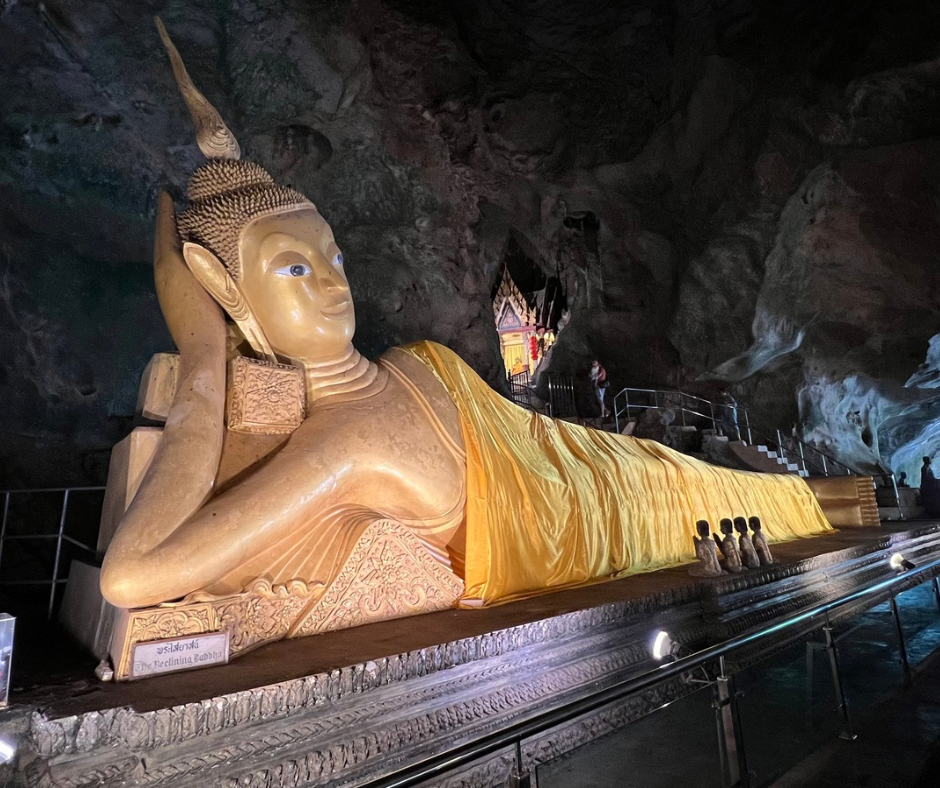
It is no wonder the temple is called a cave temple: its spaces consist of four completely different grottos. In the first, large cave, tourists are greeted by a 15-meter-tall statue of Buddha. He lies in a relaxed pose surrounded by stupas of various sizes. These stupas contain the ashes of the former governor and members of his family. There are also smaller statues of Buddha in the room. To the left of the large monument, a monk is sometimes present who may tie a sai sin (a sacred thread around the wrist)

From the first room, you can climb stairs to the second, bright cave. On the right, it is open to the sun and bathed in light on fine days. There is also a statue here, but not of Buddha—it is a hermit monk who came here to meditate long ago. Finally, tourists can see the royal seals here. They confirm that members of the Royal Family have visited.

Beyond it lies a small, dark cave inhabited by bats that do not harm people and do not pay them any attention. But if you listen closely, you can hear them squeaking. Unfortunately, the cave still bears traces of vandalism, and a warning sign about fines for damaging temple property now hangs near their "artwork."

The name of the fourth cave is very descriptive: it is covered with rocky formations—stalactites, stalagmites, and stalagnates. You can climb here via stone steps carved directly into the cliff. This natural creation is truly magnificent.

How the Cave Temple Came to Be
This site was recorded in documents as early as the beginning of the 18th century. The grottos attracted ascetics from neighboring monasteries—monks considered the caves an inspiring place for meditation. Local residents also came here with offerings. Some brought images of Buddha, and the grottos became a sacred site. The region was ruled by relatives of the Royal Dynasty, who founded their own temple within these walls—the natural defenses helped them hide and defend themselves. The most precious relics were brought here. In 1850, King Rama V (the Siamese ruler His Majesty King Chulalongkorn, who established Thailand's first power plant) visited this temple and left his imprint on the wall of the grotto. In the 20th century, researchers discovered artifacts from primitive tribes that are estimated to be 3,000 years old.
How to Get to Wat Suwan Khuha on Your Own
To get to Wat Suwan Khuha, you will need your own car or a rental car. Any map system or navigation app (such as Google Maps) will plot the route when you search for "Wat Suwan Khuha".

The temple is open daily from 8:00 a.m. to 5:00 p.m.
The entrance fee is 20 baht. This payment becomes a donation and is used to clean the grounds.
This temple is included in the following bus tours from Phuket:
Unfortunately, guides are not allowed to conduct tours inside the temple, but this gives you the opportunity to explore and photograph it on your own.

Read also:
Winter excursions in Phuket 2026-2027: where to go in December, January, and February
Useful information for visitors to Phuket