


Thailand's Phi Phi Islands: How to Get There Independently, What to See, Best Beaches, and Excursions
Contents
- What are the Phi Phi Islands and where are they located
- Which islands are part of the Phi Phi archipelago
- Phi Phi Don Island — The Heart of the Archipelago
- Maya Bay: Why it's so popular
- What to see on Phi Phi besides Maya Bay
- Phi Phi Islands Excursions from Phuket
- Independent trip to Phi Phi: how to get there and how much it costs
- Tour or independent: which to choose
- Diving in Phi Phi
- Frequently asked questions
The Phi Phi Islands are rightly considered one of Thailand's most famous attractions. It is the photographs of Maya Bay, Pileh Lagoon, and the snow-white beaches of Bamboo that most often motivate tourists to visit Phuket.
What are the Phi Phi Islands and where are they located
The Phi Phi Islands are one of Thailand's most famous archipelagos, located in the Andaman Sea between Phuket and Krabi province.
Despite common belief, Phi Phi is not one island, but an entire archipelago consisting of six islands: Phi Phi Don, Phi Phi Leh, Bamboo, Mosquito, Bida Nai, and Bida Nok. Each of them is unique in its own way. There are uninhabited national park islands, picturesque lagoons, coral reefs, and the only inhabited island of the archipelago — Phi Phi Don, where hotels, restaurants, shops, and all tourist infrastructure are located.
The first inhabitants of Phi Phi Don Island came from Malaysia. According to one of the most common versions, it was they who gave the archipelago its name. The settlers were impressed by the dense thickets of the Avicennia marina mangrove trees, which the locals called "api-api." When in bloom, the crowns of these trees took on a bright hue, which led the islands to be called "Pulau Api-Api," which can be translated as "fiery islands."
Over time, the Malay name changed under the influence of the Thai language and gradually became the familiar "Phi Phi." Today, the origin of the archipelago's name remains one of the most popular local legends, often told to tourists during island excursions.
Today, the archipelago is part of Hat Nopparat Thara - Mu Ko Phi Phi National Park. Thanks to its protected status, many natural attractions have been preserved here, and some areas are periodically closed for ecosystem restoration. This is why the Phi Phi Islands are still considered one of the most beautiful corners of southern Thailand and annually attract millions of tourists from all over the world.

Which islands are part of the Phi Phi archipelago
The Phi Phi archipelago consists of six islands, each interesting and distinct from the others. During most excursions, tourists visit several islands in one day, allowing them to see the region's most famous natural attractions and appreciate the diversity of the archipelago's landscapes.
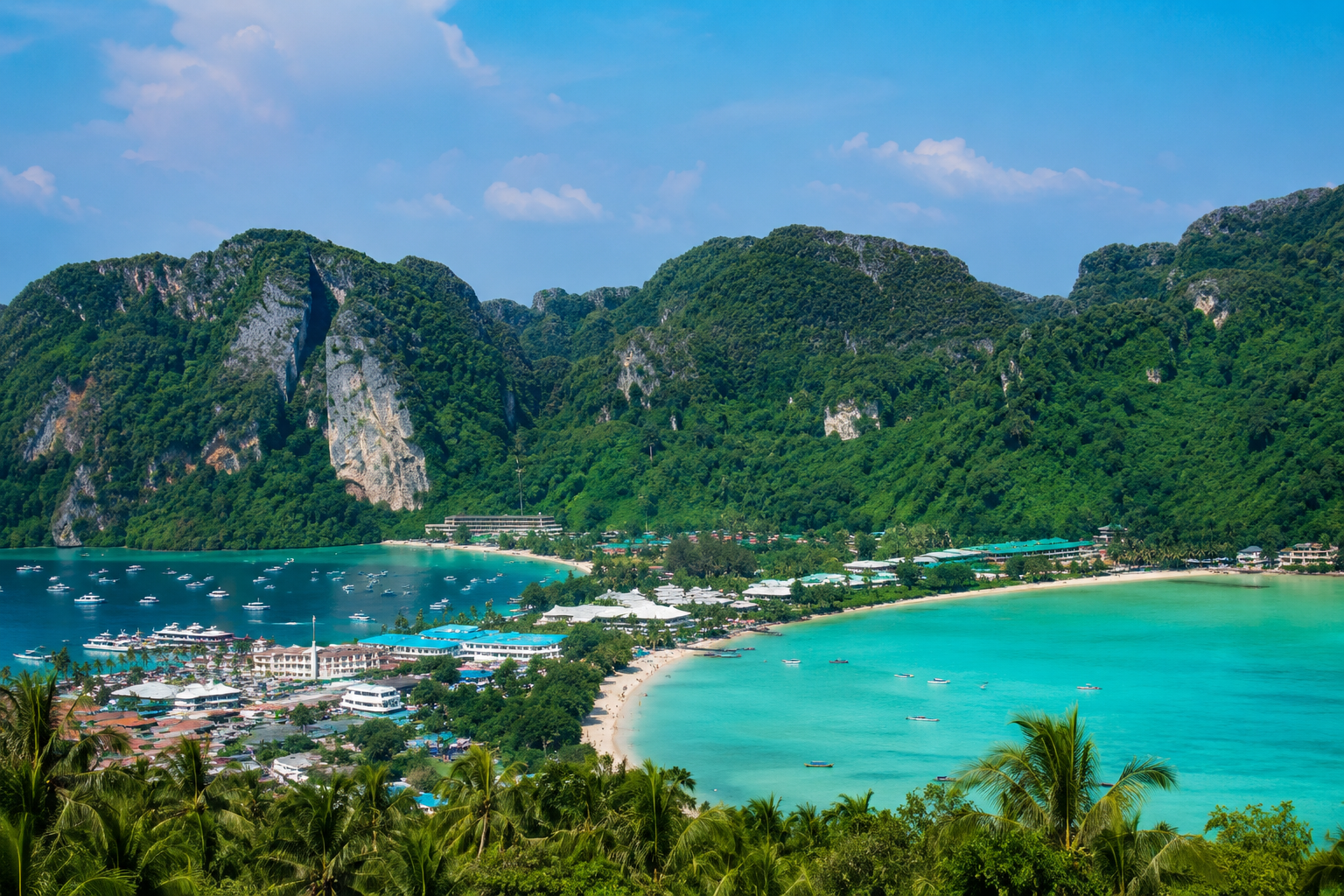
The largest and only inhabited island is Phi Phi Don. This is where all the tourist infrastructure of the archipelago is concentrated. The island has hotels of various categories, restaurants, cafes, shops, ATMs, a medical center, and piers that receive ferries and speedboats from Phuket, Krabi, and other resorts in southern Thailand. Despite its popularity among tourists, Phi Phi Don has no car roads or conventional transport. Most travelers move on foot, and bicycles and motorized trolleys are used for transporting goods. The famous Phi Phi Viewpoint is also located here, offering one of Thailand's most recognizable views of the island's two bays.

The second largest island in the archipelago is Phi Phi Leh. Unlike Phi Phi Don, it is completely uninhabited and is part of the Hat Nopparat Thara – Mu Ko Phi Phi National Park. This is where the archipelago's most famous natural attractions are located. First and foremost, Maya Bay, which became famous after the film "The Beach" starring Leonardo DiCaprio. Pileh Lagoon, with its emerald water surrounded by sheer limestone cliffs several tens of meters high, is no less popular. Another hallmark of the island is the Viking Cave, where salangane nests, used to prepare the famous Asian delicacy — bird's nest soup, have been harvested for many years.

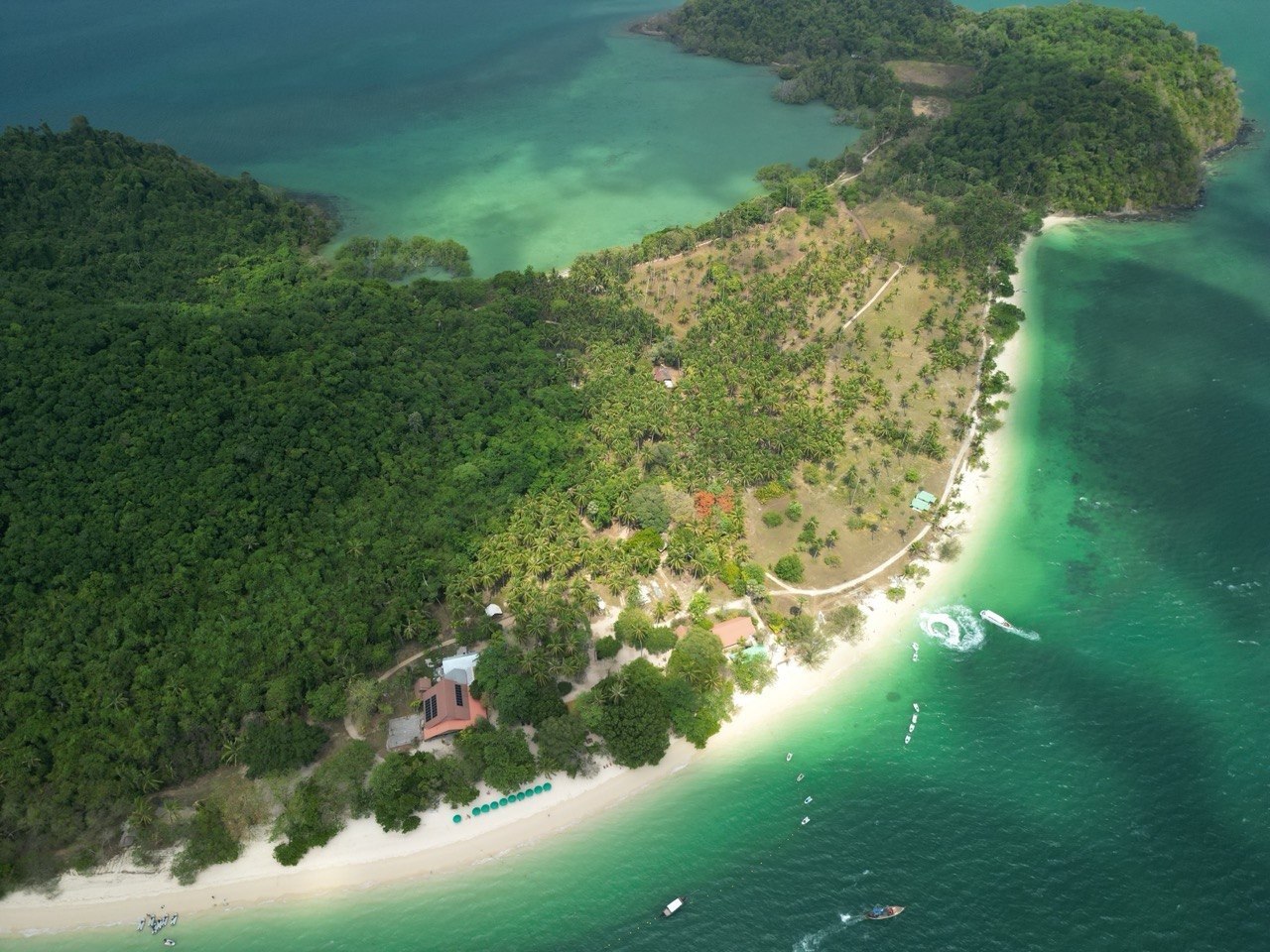
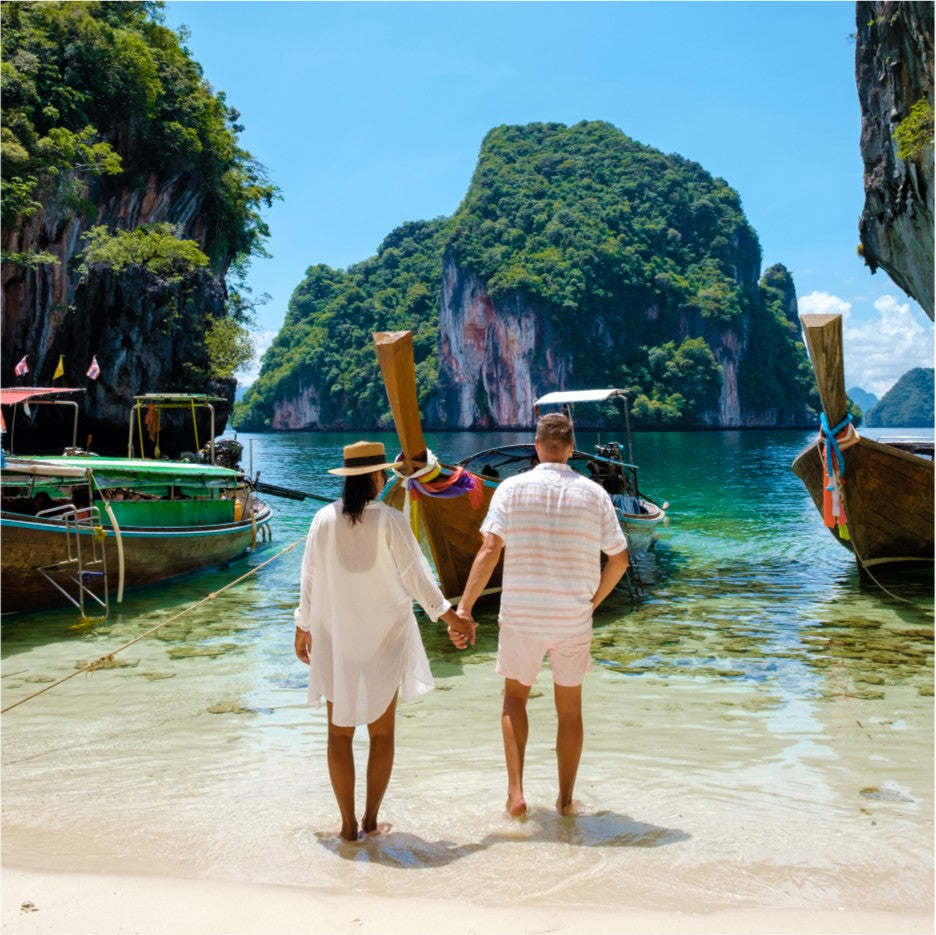
A special place among the islands of the archipelago is occupied by Bamboo Island. Many tourists consider it the most beautiful island of Phi Phi. There are no hotels, roads, or permanent population here, but there is a spacious white sand beach, clear turquoise water, and picturesque groves of casuarina trees that provide natural shade even on the hottest days. The island is part of the national park territory, so its natural state is carefully monitored by rangers. On Bamboo, you can snorkel near the coral reef, relax on the beach, or observe the large monitor lizards that have long grown accustomed to the presence of tourists. It is photos from Bamboo Island that are most often used in promotional materials about tropical holidays in Thailand.

Not far from Bamboo is Mosquito Island, also known as Yung. Its shores are surrounded by coral reefs, which are especially visible at low tide. Thanks to its rich underwater world, this place has long been popular among snorkeling and diving enthusiasts. However, in recent years, the island has been periodically closed to visitors as part of the national park's conservation efforts aimed at restoring the marine ecosystem and coral reefs.

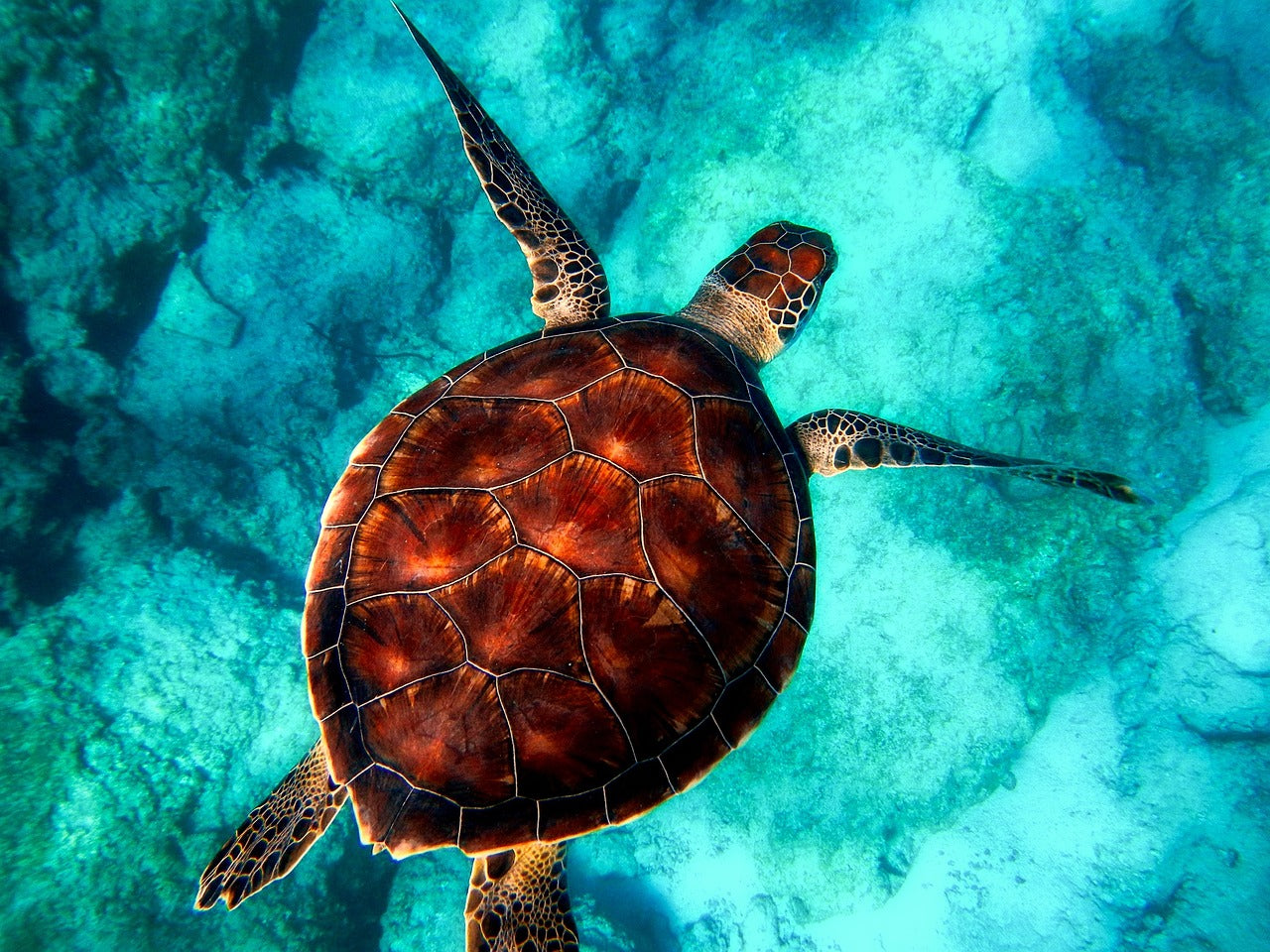
The archipelago concludes with the small islands of Bida Nai and Bida Nok. Despite their modest size, they are well-known among divers worldwide. These limestone cliffs plunge almost vertically into the sea and are surrounded by deep waters with excellent visibility. There are no beaches, jetties, or tourist infrastructure here, but underwater you can encounter sea turtles, moray eels, barracudas, clownfish, leopard sharks, and many other inhabitants of the Andaman Sea. This is why Bida Nai and Bida Nok are considered some of the best dive sites not only in the Phi Phi archipelago but throughout southern Thailand.

Thanks to such diversity, the Phi Phi archipelago is interesting not only for beach lovers. Diving and snorkeling enthusiasts, lovers of beautiful landscapes, photographers, travelers who prefer island walks, and tourists who want to see Thailand's most famous natural attractions in one trip will find interesting places here.
Phi Phi Don Island — The Heart of the Archipelago
Phi Phi Don is the largest and only inhabited island of the Phi Phi archipelago. All ferries and speedboats from Phuket and Krabi arrive here, and most tourists begin their introduction to the islands from the local Tonsai Pier. Unlike the neighboring Phi Phi Leh, which is entirely part of the national park's protected area and remains uninhabited, Phi Phi Don has been a full-fledged tourist center of the archipelago for many years.

All the necessary infrastructure for a comfortable stay is concentrated on the island. Here you'll find hotels of various categories — from inexpensive guesthouses to luxurious resorts, restaurants and cafes serving Thai and European cuisine, shops, ATMs, and medical facilities. This is why many travelers choose Phi Phi Don not only for a day trip but also for an overnight stay for several days.
Island Atmosphere and Local Life
The central part of the island is located on a narrow sandy spit between two picturesque bays — Tonsai and Loh Dalum. This is where the main village formed, concentrating most of the infrastructure. Despite its enormous popularity among tourists, the island has managed to preserve a special atmosphere that significantly differs from Phuket.
On Phi Phi Don, there are practically no cars or wide roads. Getting around is usually done on foot, and bicycles, small motorbikes, and special carts are used for transporting goods. Thanks to this, the island lacks the usual urban noise, and strolls along the narrow streets become part of the local charm.
In addition to tourist infrastructure, all the necessary social infrastructure for local residents is also here: a school, police station, hospital, mosques, shops, and markets. Despite the constant flow of tourists, Phi Phi Don remains a place where people live and work, not just a resort area.
Nightlife on Phi Phi
After sunset, the island noticeably transforms. Loh Dalum Bay becomes the main center of evening life, with numerous bars, restaurants, and beach clubs lining its shores. It is here that the famous fire shows take place daily, attracting tourists from all over the island.
Later, parties and discos begin on the beach, thanks to which Phi Phi Don has long earned a reputation as one of Thailand's liveliest islands. However, those who prefer a quiet holiday need not worry — the bustling nightlife is concentrated mainly in the Loh Dalum area, while the northern and eastern parts of the island remain quiet even during peak season.

Phi Phi Viewpoint
The main attraction of Phi Phi Don is the Phi Phi Viewpoint. This is where you can find the iconic view often seen on postcards, advertising posters, and tourist brochures dedicated to Thailand.
The climb to the viewpoint is through hilly terrain and takes about 20-40 minutes, depending on physical fitness. The reward is a panoramic view of the two bays — Tonsai and Loh Dalum, separated by a narrow sandy isthmus where the island's main village is located.

It's especially beautiful here at sunrise and before sunset, when the sun paints the limestone cliffs and the sea in golden hues. Admission to the viewpoint is paid and costs about 50 baht per person. When visiting, keep in mind that most locals are Muslim, so bringing alcoholic beverages into the viewpoint area is prohibited.
Beaches of Phi Phi Don Island
Although Maya Bay on Phi Phi Leh Island is considered the main natural attraction of the archipelago, most of the beaches where tourists relax and stay for several days are located on Phi Phi Don.
One of the best beaches on the island is Long Beach. Thanks to its soft white sand, clear water, and shallow entry into the sea, it is excellent for swimming and snorkeling. It is significantly quieter here than in the area of the main Tonsai pier, and the views of Phi Phi Leh are especially beautiful in the morning hours.
Loh Dalum Beach is no less famous. By day, it is a picturesque beach with a beautiful bay and calm water, and after sunset, it transforms into the island's nightlife hub. This is where the famous fire shows and beach parties take place, thanks to which Phi Phi has gained popularity among young people.

For a more peaceful holiday, Laem Tong Beach, located at the northern tip of the island, is suitable. Several high-end resorts are located here, and the number of tourists, even during peak season, is noticeably smaller. Due to its remoteness from the central part of the island, the atmosphere here is more secluded and relaxed.
On the east coast is Loh Moo Dee Beach. Getting here is a little more difficult, so the beach remains less crowded. It is chosen by tourists who want to spend time away from noisy areas and enjoy the beautiful views of the tropical island.
Another popular location is Monkey Beach. This small beach got its name from the colony of monkeys that have long made the coast their home and often come out to tourists. Despite the popularity of the place, feeding the animals and getting too close to them is not recommended.

Should you stay overnight on Phi Phi Don?
Most tours to Phi Phi are designed for one day, but the island reveals itself in a completely different way after most tour groups leave. In the morning, you can watch the sunrise on an almost empty beach, in the afternoon you can calmly explore remote coves and viewpoints, and in the evening you can enjoy the atmosphere of island life without rushing.
That is why many travelers believe that at least one night on Phi Phi Don allows them to see the archipelago from a completely different perspective and feel the atmosphere that has made the Phi Phi Islands one of Thailand's most popular destinations for many years.
Maya Bay: why is it so popular?
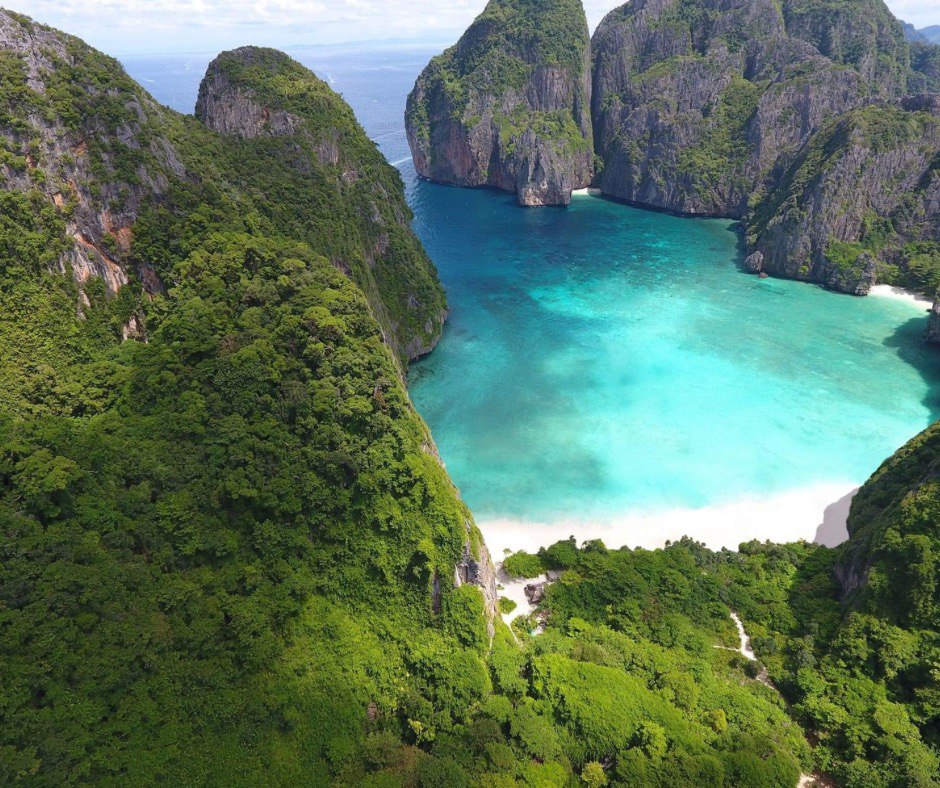
Today, Maya Bay is considered one of the main attractions not only of the Phi Phi archipelago but of all of Thailand. The white sandy beach, surrounded by towering limestone cliffs, attracts hundreds of thousands of tourists from all over the world every year. However, this bay's path to global fame was not easy and largely changed its destiny.
How Maya Bay became famous
Until the late 1990s, Maya Bay was known mainly among travelers exploring the Andaman Sea islands. The situation changed dramatically in 1999 when the film "The Beach" starring Leonardo DiCaprio was filmed here.

To create a more spectacular picture, the film crew altered part of the bay's natural landscape. Some areas of vegetation were cut down, and sand dunes were partially transformed to meet the needs of the filming process. These actions provoked protests from environmental organizations even before the film's release.
After its world premiere in 2000, Maya Bay literally woke up famous. Thousands of tourists wanted to see the beach with their own eyes, and over time, the flow of visitors began to number in the millions per year.

Lawsuit after the film shoot
Thai environmental organizations did not let the situation go unnoticed. After many years of litigation, the Supreme Court of Thailand recognized that environmental regulations had been violated during the preparation for filming. Responsibility for environmental damage was placed on both the film company representatives and the state agencies that issued the permit for the work.
Although mass tourism subsequently became the main threat to the bay, rather than the filming, this lawsuit was the first loud signal about the need for a more careful attitude towards Maya Bay's unique ecosystem.
Why the bay had to be closed
Maya Bay's popularity grew so rapidly that by the mid-2010s, the bay was on the verge of ecological disaster. During peak season, 5–6 thousand tourists visited daily. Dozens of speedboats and longtail boats entered directly onto the beach, and visitors literally filled the entire coastline.
The constant boat traffic led to the destruction of coral reefs, deterioration of water quality, and a reduction in marine life populations. According to marine biologists, a significant portion of the corals in the bay area was damaged.
In June 2018, Thai authorities decided to completely close Maya Bay to visitors. Initially, it was assumed that restoration work would take several months, but the ecosystem required significantly more time. As a result, the bay remained closed for almost three and a half years and reopened to tourists only in early 2022.

New rules for visiting Maya Bay
After its reopening, authorities introduced strict restrictions that are still in effect. The main change was a complete ban on boats entering the beach directly. Now all excursion vessels arrive from Loh Samah Bay, and tourists access Maya Bay via specially equipped wooden boardwalks through the national park.
In addition, there was a limit on the number of visitors. Thanks to this, the bay no longer looks like it did a few years ago, when the beach was crowded with people almost around the clock. Even during peak season, it has become significantly more comfortable to be here.
To preserve nature, full swimming is also prohibited. Tourists are allowed to enter the water only to a shallow depth for walking and taking photos.

Annual closure of Maya Bay
In addition to permanent restrictions, the bay is closed annually for ecosystem restoration. This usually happens from August 1 to September 30 — during the southwest monsoon season.
During this time, excursions to the Phi Phi Islands continue, but landing on the beach is not possible. In favorable weather, excursion boats approach the bay close enough for tourists to see the famous beach and take photos against the backdrop of the cliffs.
Reef sharks return to Maya Bay
One of the most noticeable results of the ecosystem's recovery has been the return of blacktip reef sharks. After the bay's closure, their numbers significantly increased, and today young sharks can regularly be seen near the shore.

These sharks are not dangerous to humans and are considered an important indicator of marine ecosystem health. Their return has become one of the main proofs that the restrictions have indeed helped nature recover.
Is Maya Bay worth visiting today?
Despite all the restrictions, Maya Bay remains one of Thailand's most impressive places. Moreover, many travelers note that after its reopening, the bay has become much more pleasant to visit. Thanks to controlled tourist numbers and strict conservation measures, there are no longer the huge crowds that were an integral part of any trip to Phi Phi just a few years ago.
Today, Maya Bay remains a symbol of the Phi Phi archipelago and one of the few examples of how a popular tourist attraction has been preserved for future generations without closing it to travelers permanently.

What to see on Phi Phi besides Maya Bay
Many tourists are surprised to learn that Maya Bay is far from the archipelago's only attraction.
One of the most beautiful places is Pileh Lagoon. It is surrounded by high limestone cliffs, and the water here has an incredible turquoise hue. Thanks to its sheltered location, the lagoon often resembles a huge natural swimming pool.

Another well-known location is Viking Cave. Tourists are not allowed inside, but during sea excursions, boats pass close enough to see it from the outside. Today, swiftlet nests are still harvested here — birds from which the famous Asian delicacy "bird's nest soup" is prepared.

Excursions to Phi Phi Islands from Phuket
The Phi Phi Islands have been one of the most popular excursions from Phuket for many years. However, not every program is equally comfortable and safe. That is why we do not aim to offer tourists dozens of similar tours from different companies, but select only those programs that truly deserve attention in terms of price, quality, and organization level.
Currently, we offer the following excursions to the Phi Phi Islands:
- Phi Phi + Khai Islands
- Phi Phi + Bamboo Islands (standard and early departure)
- Phi Phi + Bamboo PRO (early catamaran departure)
- Phi Phi + Bamboo Islands (on a catamaran with a slide)
- Phi Phi + Khai Islands (on a catamaran)
-
James Bond Islands + Phi Phi
- James Bond Islands + Krabi + Phi Phi (2 days/1 night)
- 11 Islands (2 days/1 night)
All programs presented on our website are carried out by licensed carriers who have the necessary permits to operate in national parks and many years of experience in organizing sea excursions. When choosing partners, we focus not only on the tour cost but also on the technical condition of the fleet, service level, professionalism of the crews, and real tourist reviews.

We pay special attention to safety. Sea trips are carried out on modern speedboats and catamarans, and all passengers are provided with life jackets. In case of unfavorable weather conditions, programs may be adjusted or canceled by order of the Royal Thai Marine Police.
For tourists who want to see Phi Phi without large crowds, we recommend choosing programs with early departure. Such excursions allow you to arrive at the archipelago's most popular locations before most tourist groups. This way, you can enjoy Maya Bay, Pileh Lagoon, and Bamboo Island in a calmer atmosphere, take beautiful photos, and spend more time on the islands without feeling like a crowded resort.
If you are unsure which program is right for you, our managers will help you choose an excursion based on your group's composition, children's ages, vacation preferences, and travel season. Over 14 years of working in Phuket, we have tested dozens of routes and kept only those excursions that we are ready to recommend to our friends and family.
Independent trip to Phi Phi: how to get there and how much it costs
Phi Phi Don is the only inhabited island of the archipelago, so you can get here independently at any time of the year. Regular connections with Phuket and Krabi are provided by passenger ferries and speedboats.
Ferry or speedboat: what to choose
For a trip to Phi Phi, two main transport options are available — ferry and speedboat. Each method has its advantages, so the choice depends on your goals, budget, and group composition.
A speedboat allows you to reach the island in approximately one hour. This is the fastest transfer option, especially convenient for those who don't want to spend a lot of time traveling. However, the trip takes place on the open sea, so it can be choppy in windy weather. In addition, this type of transport is not recommended for pregnant women, people with serious musculoskeletal disorders, and children under one year old.
The ferry takes significantly longer — from two to two and a half hours, but is considered a more comfortable option. On board there are air-conditioned cabins, toilets, cafes, and enough space for luggage. That is why most tourists who go to Phi Phi for several days with suitcases and personal belongings prefer to choose the ferry.

Transfer from Phuket to Phi Phi
You can book a transfer to the island in advance through our agency. The price usually includes not only the ferry or speedboat ticket but also a minivan transfer from your hotel to the pier. For some remote areas of Phuket, an additional fee may apply for the transfer, so it is best to clarify this in advance.Upon arrival on the island, all tourists pay a local environmental fee of 20 baht per person. The fee is collected at the Phi Phi Don pier regardless of the mode of arrival.
Should you go to Phi Phi for one day independently?
Technically, it is possible, but this format is not suitable for everyone. Most of the day will be spent on the road, leaving very little time to explore the island. An independent trip is more suitable for those who plan to spend at least one or two nights on Phi Phi and want to leisurely explore the island without being tied to an excursion schedule.
Where to stay on Phi Phi Don
Booking a hotel on Phi Phi Don is easy. We recommend using Trip.com, as the service allows you to pay for bookings in various ways, including Russian bank cards and in rubles. Most hotels on the island are represented on this platform, and prices are often lower than on other aggregators.

When choosing a hotel, location is important. Hotels are located all over the island, and some can only be reached by longtail boat taxi. If you plan to actively explore the island, visit cafes, bars, and viewpoints, it is better to choose accommodation near Tonsai Bay or Loh Dalum Bay. For a more relaxed holiday, hotels on Long Beach, Laem Tong Beach, and in the remote bays of the northern part of the island are suitable. Before booking, be sure to clarify the transfer method from the pier to the hotel and its cost.
Hotels for those who love an active life
If you want to be close to cafes, restaurants, the pier, and evening entertainment, it's best to choose accommodation in the Ton Sai and Loh Dalum Bay areas. This is where the main tourist life of the island is concentrated.
Among the popular and relatively budget-friendly options are Andaman Beach Resort, U Rip Resort, Phi Phi Villa Resort, Chaokoh Phi Phi Hotel & Resort, and Gypsea Sea View Resort.
These hotels cannot be called luxurious premium resorts, but they offer good value for money. Some may show signs of age in the interiors, and some are undergoing partial renovation, but overall, these are good options for tourists who come to the island for experiences, not for round-the-clock room stays.
Hotels for a Relaxing Stay
For those who come to Phi Phi for beautiful beaches and tranquility, it's better to consider the areas of Long Beach, Laem Tong, or the remote bays in the northern part of the island.
Here, there are almost no noisy bars and night parties, but there are beautiful beaches, clear seas, and a more relaxed atmosphere. Many hotels are located right on the shore, and some are on hillsides, offering stunning views of the archipelago.
When choosing a hotel in remote areas, it's worth checking in advance about transfers to the pier or nearest beaches.
Phi Phi Viewpoint
The island's main attraction is the famous Phi Phi Viewpoint.
It is from here that you get that iconic view of the narrow sandy strip between Ton Sai and Loh Dalum bays, which can be seen on most postcards and advertising photos of Thailand.

The climb is not entirely easy, especially in hot weather, so it's best to go early in the morning or closer to sunset. Along the way, there are several viewpoints, and the first one features the famous "I Love Phi Phi" sign.
The entrance fee to the viewpoint is 50 baht per person. Alcohol is not allowed. It is also recommended to wear regular clothes instead of swimsuits, as the island has Muslim traditions.

Fire Shows and Nightlife
After sunset, the center of island life shifts to Loh Dalum Bay.
Dozens of beach bars operate here, famous fire shows take place daily, followed by contests and parties that continue almost until dawn.

Slinky Bar is one of the most famous spots, but fire shows also take place at many neighboring establishments. Entry is usually free, but visitors are asked to order a drink if they occupy tables or sun loungers.
It is worth noting that on public holidays, religious events, and election days, alcohol sales may be prohibited, and many establishments temporarily close.
Ton Sai and Loh Dalum Beaches
If you don't want to go anywhere, you can spend the day on the island's beaches.
Ton Sai and Loh Dalum bays are within walking distance of almost all hotels in the central part of Phi Phi Don. At high tide, you can swim here, and at low tide, the sea recedes quite far from the shore, exposing sandy shoals.
Kayaks and SUP boards
Many beaches offer kayak and SUP board rentals.
This is a great way to explore the island's coastline independently, reach small coves, and see the Phi Phi cliffs from the water. Such trips are especially beautiful early in the morning while the sea remains calm.

What to see near Phi Phi Don
Many tourists who come to the island for several days rent traditional Thai longtail boats. This is one of the most popular ways to see the archipelago's natural attractions without being tied to tour groups.
Trip to Maya Bay and Pileh Lagoon
The most popular route remains visiting Maya Bay, Loh Samah Bay, Pileh Lagoon, Viking Cave, and Monkey Beach.
It's best to embark on such a trip early in the morning. At this time, Maya Bay beach is relatively uncrowded, and you can spot young blacktip reef sharks near the shore, which often appear in shallow waters.
Sunset and glowing plankton
Evening routes with glowing plankton deserve special attention.
Many tourists choose such trips precisely for the bioluminescence, but the main impression is usually the sunset in the open sea. When the sun begins to hide behind the archipelago's limestone cliffs, the landscapes become truly fantastic.
After dark, you can see the plankton glowing in the water. This effect is especially vivid on moonless nights.
It's important to remember that national park entrance fees are usually not included in the longtail boat rental price and are paid separately.

Where to eat on Phi Phi Don
There are no problems with food on the island, even during high season.
Phi Phi Don has dozens of restaurants, cafes, and street food establishments for every budget. Here you can find traditional Thai cuisine, as well as European dishes, pizza, burgers, seafood, and vegetarian menus.
International fast-food chains, including McDonald's and Burger King, are also present on the island. In addition, there are 7-Eleven stores where you can buy drinks, snacks, and essential goods.
Prices in restaurants are usually slightly higher than in Phuket, but the difference is not significant enough to inconvenience most tourists.

Useful tips before an independent trip
Before traveling to Phi Phi, it's better to exchange currency in Phuket beforehand. There are exchange offices and ATMs on the island, but the exchange rate is usually less favorable.
If you plan underwater photography, it's better to purchase phone cases and other equipment in advance, as these items are more expensive on the island.
For snorkeling, the main rule is important to remember — do not touch marine life, corals, or any unfamiliar objects underwater. Most unpleasant situations occur precisely because of attempts to touch marine creatures.
It's also worth noting that Phi Phi Leh is part of a national park. Fishing, hunting, coral collecting, and any actions that could harm the environment are prohibited here.
If you plan to bring a drone, make sure it is registered in Thailand and you have the necessary permits. National parks have additional flight restrictions, and violating the rules can lead to serious fines.
Excursion or independent: what to choose
There is no single answer to this question — each traveler has their own preferred vacation format.
If you don't want to spend time organizing your trip, figuring out ferry schedules, looking for transfers to the pier, buying national park tickets, and planning your route between the islands, then it's better to choose an excursion. Moreover, both one-day and two-day programs are now available, visiting the most interesting locations of the archipelago. In this case, all organizational matters are handled by our travel agency, and you just have to enjoy your vacation.
An independent trip is more suitable for those who like to travel without being tied to a schedule, are willing to organize themselves and their family in an unfamiliar place, are not afraid of the language barrier, and are willing to spend a little more time planning the route. In addition, an independent vacation often turns out to be somewhat more expensive than it seems at first glance. In addition to transfer and accommodation, you need to consider the cost of boats, national park tickets, food, and movement around the island.
At the same time, an independent trip allows you to see Phi Phi from a completely different side. You can watch the sunrise from the viewpoint, stroll around the island in the evening after the tour groups leave, explore the beaches at your leisure, and not be dependent on the tour schedule.
In our experience, for a first acquaintance with the archipelago, most tourists will find a quality one- or two-day excursion sufficient. And if you truly love the islands, next time you can plan an independent trip with an overnight stay and get to know Phi Phi in more detail.
Diving in Phi Phi
The Phi Phi Islands have long been considered one of the best places for diving in Thailand. It is here that the famous dive sites Bida Nai and Bida Nok are located, attracting certified divers from all over the world. During dives, you can encounter sea turtles, barracudas, moray eels, cuttlefish, octopuses, various species of reef fish, and sharks.
It is important to understand that full-fledged diving in the Phi Phi Islands is primarily aimed at people with an international diver's certificate. Many interesting spots are at significant depths and require appropriate training and diving experience.

If you don't have a certificate but still want to explore the underwater world of the archipelago, snorkeling is an excellent alternative. During excursions to Phi Phi, tourists usually visit several snorkeling spots where they can see coral reefs, tropical fish, sea urchins, and other inhabitants of the Andaman Sea. Pileh Lagoon, the area around Bamboo Island, and the bays around Phi Phi Leh are especially popular for snorkeling.
For those who already have a certificate, Phi Phi Don has dozens of diving centers organizing dives both on the nearest reefs of the archipelago and at more distant dive sites in the Andaman Sea. Many experienced divers specifically come to Phi Phi for several days precisely for underwater dives, considering these places among the best in southern Thailand.
Frequently asked questions
Where are the Phi Phi Islands located?
The Phi Phi archipelago is located in the Andaman Sea between Phuket and Krabi province. The distance from Phuket is about 45 kilometers. The archipelago consists of six islands, the largest of which are Phi Phi Don and Phi Phi Leh.
How to get to Phi Phi from Phuket independently?
You can get to Phi Phi independently by ferry or speedboat. Ferries depart daily from Phuket piers and arrive at Phi Phi Don Island. The journey takes from 1.5 to 2.5 hours, depending on the type of transport and weather conditions.
How much does a trip to the Phi Phi Islands cost?
The cost depends on the format of the trip. One-day excursions are usually cheaper than an independent trip if you consider transfers, national park tickets, boat rentals, and accommodation on the island. An independent trip becomes more cost-effective for a longer stay on Phi Phi.
Can I go to Phi Phi without a tour?
Yes, the archipelago is open to independent travelers. Ferries and speedboats regularly run from Phuket and Krabi to Phi Phi Don Island. The island has hotels, restaurants, shops, and all the necessary tourist infrastructure.
How many days are needed in Phi Phi?
A one-day excursion is enough to see the main attractions. If you want to see the island without crowds of tourists, watch the sunrise from the viewpoint, visit several beaches, and take a longtail boat trip, it's best to plan a trip for at least 2-3 days.
When is the best time to go to the Phi Phi Islands?
The best time is considered to be from November to May. During this period, the sea is usually calm, and the probability of heavy rains is minimal. Excursions are also conducted during the summer season, but waves and route changes are possible depending on weather conditions.
Can you swim in Maya Bay?
Swimming in the bay is strictly prohibited to protect the ecosystem. These restrictions were introduced after the bay's restoration and remain in effect.
When does Maya Bay close?
Annually, Maya Bay closes to visitors approximately from August 1st to September 30th. During this period, ecosystem restoration and preventive work are carried out in the national park. Excursions to Phi Phi continue, but landing on the beach is not permitted.
Are there hotels on the Phi Phi Islands?
Yes, hotels are located on Phi Phi Don Island. Here you can find both budget guesthouses and expensive resort complexes. Accommodation is prohibited on Phi Phi Leh and Bamboo islands as they are part of the national park.
What to see in Phi Phi independently?
The most popular attractions are the Phi Phi Viewpoint, Long Beach and Loh Dalum beaches, Ton Sai Bay, Monkey Beach, Pileh Lagoon, Maya Bay, and Viking Cave. Kayaking, stand-up paddleboarding, and longtail boat trips around the archipelago are also popular.
Are there ATMs, pharmacies, and shops on Phi Phi?
Yes. All infrastructure is concentrated on Phi Phi Don Island. There are ATMs, currency exchange offices, pharmacies, supermarkets, 7-Eleven stores, cafes, restaurants, and medical centers.
Can I bring a drone to Phi Phi?
The use of drones in Thailand is regulated by law. Legal flights require drone registration, and filming in national parks may require additional permits. Violations of the rules can result in large fines.
Are there sharks in Phi Phi?
Yes, blacktip reef sharks inhabit the archipelago area. They are most often seen near Maya Bay and some snorkeling spots. These sharks pose no danger to humans and are considered an important part of the local ecosystem.
Read also:
Where to swim in Phuket during the rainy season: safe beaches and tips
Best excursions in Phuket in summer 2026 — where to go in the rainy season