












Phuket Rainy Season: When It Starts, Whether It's Worth Visiting, and What Tourists Can Expect

Many tourists planning a holiday in Thailand are concerned about the rainy season in Phuket. You can find many conflicting reviews online: some claim that it’s impossible to leave your hotel on the island in summer, while others, on the contrary, call this period the best time for a quiet and inexpensive holiday. The truth, as usual, lies somewhere in the middle.

The rainy season does exist, but it differs significantly from what many travelers imagine. It's not months of continuous downpours, but a period of more changeable weather, where sunny days alternate with tropical rains. If you understand the peculiarities of Phuket's climate and plan your holiday correctly, a summer vacation can be just as pleasant as a winter one.
When does the rainy season start in Phuket?
The rainy season is traditionally considered to be the period from May to October. It is during this time that the southwest monsoon begins to prevail over the Andaman Sea, bringing more moisture and strengthening the wind.
However, this does not mean that the island is covered by endless rains from the first of May. The weather changes gradually. In May, there are slightly more rains, in summer they become more regular, and the peak of precipitation usually falls in September and the first half of October. By the end of October, the number of sunny days significantly increases, and in November, the high tourist season begins.
It is important to understand that Phuket's climate remains tropical all year round. Even in January or February, a short rain may occur, and in summer, there are weeks with virtually no precipitation.


Air and sea temperatures during the rainy season
Despite the season's name, air temperature remains largely unchanged. During the day, it's usually 30–32°C, and at night — 25–27°C. High humidity makes the climate more intense, but due to cloudiness, the heat is more tolerable than in the sunniest months.
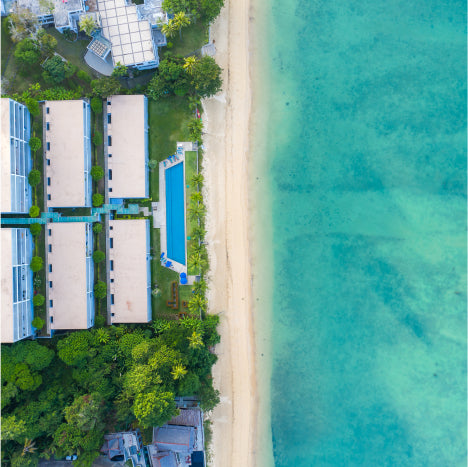
The water temperature in the Andaman Sea remains very comfortable all year round, at 28–30°C. Swimming is possible at any time of the year, but in summer, conditions on different beaches can vary significantly due to waves.
The biggest summer feature is the sea
While the rain rarely interferes with a holiday, the sea in summer requires much more attention.
From May to October, waves of varying heights regularly appear on Phuket's west coast. For surfers, this is the best time of year, but for calm swimming, conditions become less predictable.

It is in summer that red flags are almost constantly raised on popular beaches — Patong, Karon, Kata, Kamala, Bang Tao, and Nai Harn. They indicate that swimming is prohibited due to strong rip currents, which can be dangerous even for good swimmers.

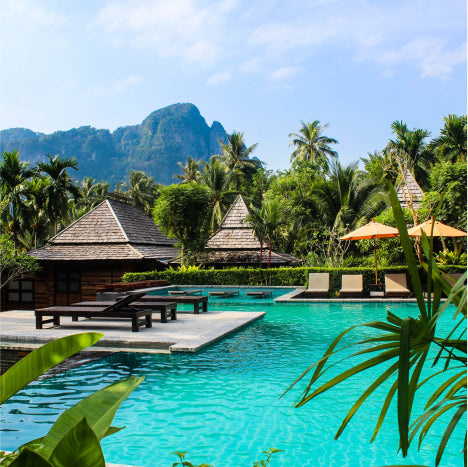
If lifeguards raise a red flag, it should not be ignored. It is better to choose a pool, go on an excursion, or visit a beach located in a more sheltered bay.


Should you go to Phuket in summer?
Definitely yes, if you understand the peculiarities of this time of year.
The main advantage of the rainy season is a significantly calmer atmosphere. There are fewer people on the beaches, long queues in popular places disappear, and the cost of a holiday significantly decreases. Prices for hotels, villas, apartments, and car rental can be 30–50% lower than in high season.
In summer, the island becomes especially green. After the rains, waterfalls come alive, tropical forests look incredibly vibrant, and Phuket's nature reveals itself from a completely different side.
If your goal is a peaceful holiday, beautiful photos, no crowds of tourists, and a reasonable budget, the summer months may even be more appealing than winter.

What to pack
When on holiday in summer, it's enough to bring a light raincoat or a compact umbrella. This is usually sufficient, as prolonged precipitation is rare.
It's equally important to use sunscreen. Many tourists mistakenly believe that clouds protect against UV rays. In reality, you can get just as sunburned on a cloudy day as you can under bright sunshine.
It's also worth having light change clothes and a waterproof case for your phone or documents if you plan long walks.
Excursions during the rainy season in Phuket
A common misconception is that excursions are practically not held in summer. In fact, this is not the case.
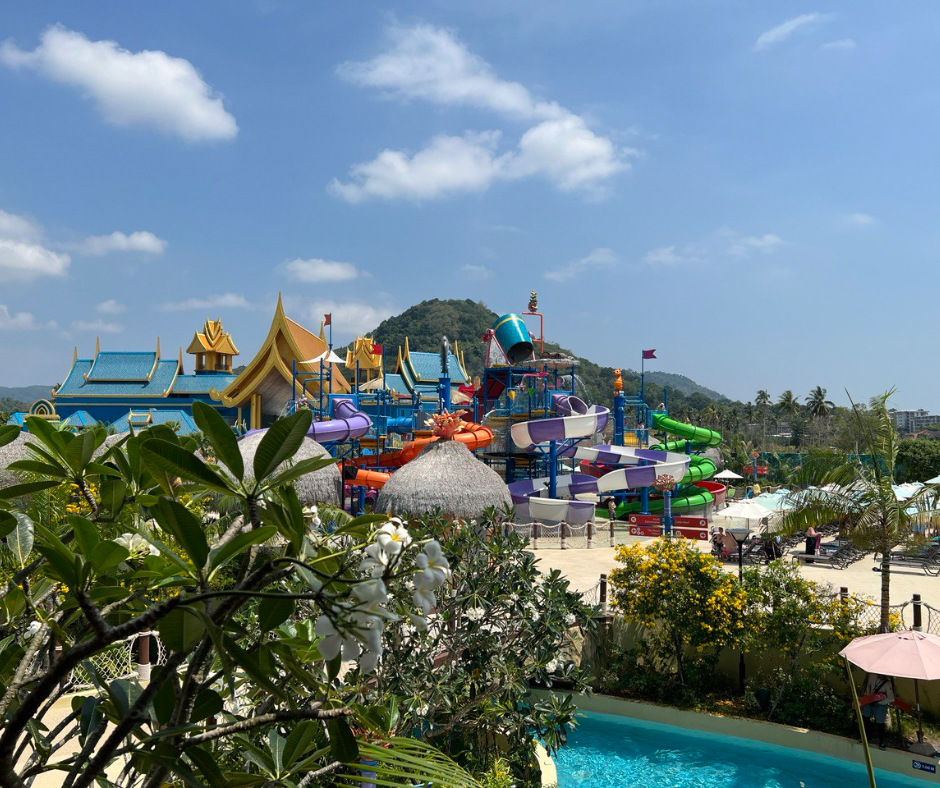
Bus excursions, evening shows, elephant centers, water parks, and ziplines operate almost daily regardless of the rain.
Most sea excursions also run on schedule. The reason for cancellation is not rain, but strong winds and high waves, when the Meteorological Department of Thailand recommends temporarily restricting boat access to the sea. That is why experienced travelers try not to leave sea excursions until the last day of their vacation — in case of a storm, the program can be rescheduled for another date.

We ourselves live and work directly in Phuket, and do not advise tourists remotely from another country. Thanks to this, we daily monitor the real weather, sea conditions, and operational information from captains and carriers. We know which companies truly comply with safety requirements, which routes will be most comfortable on a given day, and when it is better to postpone a trip if weather conditions require it. This approach allows us to recommend excursions not according to a calendar, but based on the actual situation on the island.

Common myths about the rainy season
The most popular myth is that it's impossible to relax in summer due to constant rain. In reality, most days remain sunny, and precipitation rarely lasts long.
Another misconception is related to excursions. Many believe that all islands are closed in summer. In fact, only certain national parks close, such as the Similan and Surin Islands (approximately from mid-May to mid-October). Other popular destinations continue to welcome tourists when the weather is favorable.
It is also a misconception that everything is always cheaper in Phuket in summer. While accommodation costs do significantly decrease, prices in many restaurants and shops remain largely unchanged.
Who is a rainy season vacation suitable for?
Summer Phuket is perfect for those who prefer a quiet holiday without many tourists, want to save on accommodation, and love lush tropical nature. It's a good time for travelers who are willing to accept rain as a natural part of life in the tropics, rather than a problem.
If, however, it is essential for you to swim daily in an absolutely calm sea, it is better to choose the period from December to March, when the probability of waves is minimal.

Monitor the weather in Phuket in real time
If you're planning a vacation during the rainy season and want to know what the weather is actually like on the island, rather than relying on inaccurate forecasts, subscribe to our social media channels. We daily show the real weather in Phuket: we publish photos and videos from the beaches, talk about the sea conditions, waves, rainfall, and share up-to-date information directly from the island.
We especially recommend subscribing to our Telegram channel. There, you can monitor the weather in real-time, see what Phuket looks like in different months, and be convinced that even during the rainy season, the sun often shines here, and you can have a wonderful vacation. This will help you better plan your trip and get rid of common myths about summer holidays in Thailand.
The rainy season in Phuket is not a reason to cancel your trip, but merely a different time of year with its own characteristics. Instead of endless downpours, tourists can expect warm seas, lush jungles, less crowded beaches, and attractive prices. With careful planning, a summer vacation can be just as interesting and comfortable as during the peak high season.
The main thing is to consider the specifics of the tropical climate, follow lifeguards' recommendations on the beaches, and choose a reliable tour organizer who is based in Phuket and monitors the real weather situation daily.
Read also:
"The Best Excursions in Phuket in Summer 2026 — Where to Go in the Rainy Season"