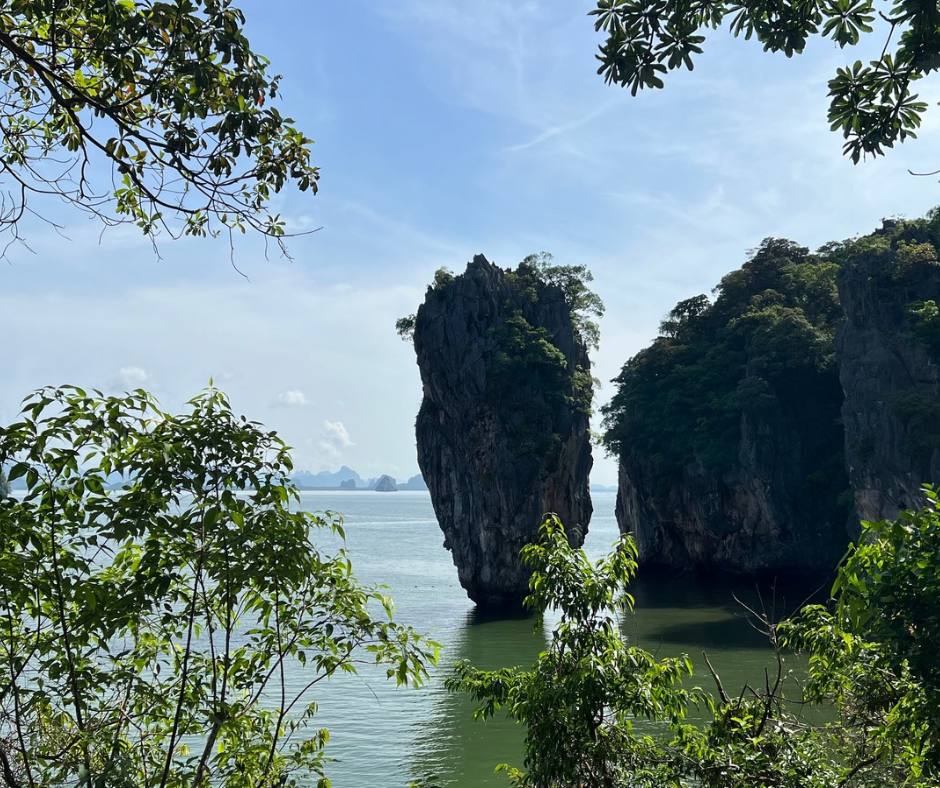
















Moving to Thailand in 2026–2027: Visas, Work, Business, Housing, Schools, and Pitfalls

Thailand remains one of the most attractive countries for relocation: warm climate, sea, developed tourist infrastructure, a large Russian-speaking community, and a relatively affordable cost of living compared to many other countries. But while a few years ago, moving to Thailand often began with a one-way ticket and the phrase "we'll figure it out on the spot," in 2026–2027, such an approach is becoming increasingly less reasonable.
The country is not closing its doors to foreigners. On the contrary, legal tourists, specialists, retirees, families, and remote workers can still live in Thailand. But at the same time, the state is consistently tightening control over violations of migration laws, illegal work, and dubious business schemes.
Starting September 15, 2026, tourist entry rules are also changing: the previous 60-day visa-free regime is abolished, and a 30-day visa-free period is established for countries in the new program. However, separate bilateral agreements, including with Russia, remain in effect. The authorities explicitly emphasize that the changes apply specifically to tourist schemes and do not cancel other visa categories.
Therefore, the main question today is not "how to move to Thailand?" but rather "on what grounds do I intend to live here, and will I be able to do so legally and financially sustainably?"
And if there's no honest answer yet, it's better not to rush the move.
Why Thailand in 2026 is Not the Same as in 2022
For many future expats, their perception of Thailand was formed precisely in 2022–2023. After the pandemic, the country was actively bringing back foreign tourists and residents, the tourism business was recovering, and the attitude towards foreigners in many popular places was indeed maximally relaxed.
Over the subsequent years, the situation has changed.
The number of foreigners has grown, and along with it, the number of problems related to illegal work, shell companies, nominee business owners, visa violations, and the misuse of tourist statuses has also increased.
In 2026, authorities are not just talking about the need to follow rules; they are conducting joint inspections involving the Immigration Bureau, Department of Business Development, Department of Employment, and other government agencies. In August 2026, such inspections identified potential cases of nominal ownership of Thai companies and foreigners working without the necessary permits. The government has stated its intention to expand such inspections nationwide.
Even more telling is the new deportation regulation that came into effect in August 2026. It specifically covers unlawful stay, unauthorized work, and conducting business in violation of foreign business laws.
This does not mean that Thai society has become hostile to expats. Such a statement would be too crude and simply incorrect.
What has changed is that there is less willingness to turn a blind eye to violations.
And this is fundamentally important for someone planning not a two-week vacation, but a full relocation.
Moving to Thailand and Visa: Tourist Visa-Free Entry Is Not Enough
The most common mistake for a future expat is to look for ways to stay in the country as a tourist for as long as possible.
For a temporary trip, this might be relevant. For relocation, it's not.
Starting September 15, 2026, citizens of countries included in the new 30-day program receive up to 30 days of visa-free stay for tourism purposes. In some cases, an extension can be applied for, but the decision on the extension period is made by Immigration. For Russian citizens, the situation is separate: 30 days are maintained based on a bilateral agreement between Russia and Thailand.
More details in the article: Thailand Visa in 2026: New Entry Rules from September 15
But neither 30 days, nor an extension, nor even several consecutive tourist trips transform tourist status into grounds for permanent residency.
If a person truly wants to move to Thailand, they need to choose an appropriate long-term category in advance. This could be a work visa, education visa, family visa, retirement visa, DTV, or LTR – depending on the actual situation.
This is where the story of "cheap wintering" ends and real emigration begins.

Working in Thailand: Finding a Vacancy Is Not Enough
Working in Thailand for foreigners is possible, but getting a job legally is significantly more difficult than just finding an employer.
For most typical work situations, a Non-Immigrant B visa is used, and actual work requires a corresponding permit. However, there are professions and activities that are restricted to foreigners.
Therefore, the scheme "I'll fly in, find a job, and sort out the documents later" is a poor strategy.
Especially if we're talking about the tourism sector, restaurants, beauty salons, real estate, administrative work, or other areas where foreigners traditionally actively seek employment.
An employer might say that "everyone works this way here." But in case of an inspection, this does not provide legal protection for the foreigner.
That's why before moving, it's worth finding an employer who is actually willing to process documents for a foreign employee, and only then make plans to relocate.
Where to Find Legal Work in Thailand
For Russian-speaking job seekers, one of the most obvious options remains Russian job search websites. On hh.ru, there's a separate section for vacancies in Thailand, and you can indeed find job offers for foreigners there. Currently, these include vacancies for marketers, robotics specialists, engineers, project administrators, managers, and other highly specialized qualified professionals.
But it's important to look at this market without illusions.
The number of vacancies truly suitable for a foreigner with the possibility of legal employment is significantly less than the total number of offers. Some ads are for specialists with specific experience, some assume remote work, and some vacancies require knowledge of Russian, Chinese, Thai, and English, experience in the Thai market, or a willingness to work in real estate and sales.
Another option is to search for jobs directly on the websites of international companies, large hotels, international schools, and professional recruiting agencies. For specialists with in-demand qualifications, this is often much more promising than trying to find a regular office job locally.
It's important to understand one simple thing: the employer must be willing to formally employ a foreigner. If an ad only mentions salary and responsibilities but says nothing about a work permit and visa support, this issue must be clarified before you agree to the job.
What Specialists Do Foreign Employers Need?
Real opportunities for foreigners primarily exist where an employer needs a specialist with skills that are difficult to find among local candidates.
These can be managers, IT specialists, engineers, financial specialists, marketing specialists, international sales specialists, project managers, hospitality professionals, and some other areas.
The labor market in Bangkok and popular tourist destinations differs significantly.
Bangkok offers significantly more corporate vacancies and international companies. In Phuket and Pattaya, the market is more tied to tourism, real estate, hospitality, and serving an international audience.
And here lies a problem: the most attractive places for relocation do not necessarily offer the most attractive salaries and working conditions.
Working as a Teacher in Thailand: A Popular Option, But Not Always Profitable
A separate note should be made about working as a teacher. An English or other foreign language teacher is one of the traditional employment options for foreigners in Thailand.
Such vacancies indeed exist, especially in schools and educational centers. But salary expectations often turn out to be inflated.
The most attractive international schools offer significantly higher incomes, but typically require appropriate education, pedagogical qualifications, good English, and work experience. Competition for such positions is also higher.
In regular Thai schools, conditions can be much more modest. Teachers' salaries, especially for beginners, often allow a single person to live and cover basic expenses, but by no means guarantee a comfortable life for a family with a child.
Furthermore, many vacancies are not located in popular tourist areas.
A school might be in a small town or province where the cost of living is lower, but at the same time, the infrastructure familiar to foreigners is absent: Russian-speaking communities, international stores, familiar medical centers, restaurants, and other amenities.
Therefore, the idea "I'll move to Phuket and teach English" doesn't always align with the real labor market. It might turn out that a suitable vacancy is in a completely different region.
And if it's about a family, an ordinary teacher's salary rarely becomes a sufficient reason for relocation. A single person can indeed live on such a salary. For a family of three with good housing rent, medical insurance, and a child in an international school, the math is entirely different.

Why a High Salary in a Vacancy Doesn't Always Mean an Easy Relocation
On job search websites, you might find very attractive offers with salaries of hundreds of thousands of rubles or several thousand dollars per month. But here you need to look carefully at the details.
Some vacancies involve remote work. In some cases, the stated amount depends on bonuses or sales commissions. In real estate, income may be tied to actually closed deals. Some companies offer an attractive figure only to experienced specialists with specific results.
Therefore, before moving, you cannot rely solely on the most appealing salary in an advertisement.
You need to find out what amount is guaranteed, whether official employment in Thailand is provided, who handles the visa and work permit, where the workplace is located, and how much will actually remain after taxes and living expenses.
Illegal Work in Thailand: What Are the Consequences?
The worst option for a future expat is to arrive on tourist status and start working without permission.
And "work" in this case is not just official employment with a Thai company. A foreigner cannot independently decide that a specific activity is "too small to be considered work."
Thai law requires foreigners to obtain a work permit before starting work, unless the specific activity falls under a statutory exemption. In addition, there are professions and types of activities that are prohibited for foreigners or only available under certain conditions.
For example, among the activities prohibited for foreigners are Thai massage, tour guiding, street vending, certain types of brokerage, secretarial work, legal services, and a number of other professions.
It is especially dangerous to think that the absence of an official employer automatically means no risk. Working without a permit or working outside what is permitted by a specific work permit can lead to fines and deportation.
Official government clarifications indicate a fine of 5,000 to 50,000 baht and deportation for a foreigner working without a permit or outside permitted activities. The employer is also liable: the fine can range from 10,000 to 100,000 baht for each illegally employed foreigner, and repeat violations may result in criminal penalties and a ban on hiring foreigners for a certain period.
And here it is especially important to consider the current situation in the country. In 2026, government agencies are intensifying inspections of foreigners, illegal work, and companies used to circumvent legislation. Therefore, the old argument "I know someone who worked for ten years without a work permit and nothing happened to them" is certainly no longer a reasonable basis for relocation.
Can You Work on a Tourist Visa or Visa-Free Entry?
No, tourist status should not be interpreted as permission for employment.
If a person has entered Thailand on a tourist visa or visa-free regime, it does not mean they can take up employment and then obtain documents "retroactively."
The official procedure requires a proper basis for employment and obtaining permission before commencing work. For standard foreign employment, the employer participates in the process of obtaining a Non-Immigrant B visa and a work permit.
Why Moving to Thailand for a Local Salary Is a Questionable Idea
This is where it's especially important to calculate the economics.
If a person moves alone, rents a small apartment, doesn't send their child to an international school, and has moderate expectations for their standard of living, a Thai salary can indeed allow them to live normally.
But if it's about a family, the situation changes radically.
Renting good housing, medical insurance, transportation, food, and a child's education add up to a completely different budget.
Therefore, a salary of, say, 50,000–70,000 baht per month might seem normal for one person, but it's perceived very differently by a family of three.
That's why moving to Thailand for an ordinary local salary makes sense for far from everyone.
If you don't have an in-demand qualification that an international employer is willing to pay for, your own remote income, or another stable source of money, Thailand might not be a country with cheap living, but rather a country with quite an expensive relocation and limited earning opportunities.
What to Do for Those Who Still Want to Work in Thailand
The safest strategy is to look for a job before moving.
If you are a niche specialist, it makes sense to first check vacancies on hh.ru and other professional platforms, look at the websites of international companies and recruiting agencies, and then directly contact employers.
If it's about education, you need to look not only at schools in Phuket or Bangkok but also at vacancies throughout Thailand. Very often, it's there that you can see the real picture of the market: where teachers are needed, what requirements are placed on candidates, and what salary level is offered.
And then you should compare the potential income with the actual cost of living.
Because the existence of a vacancy does not yet mean there is economic sense in moving.
If, after paying for rent, insurance, transportation, and food, almost nothing is left from the salary, and a child needs to be sent to a paid school, relocating for such a job becomes more about changing the country of residence than improving the quality of life.
Self-Employment and Remote Work
A separate category are people who do not intend to get a job with a Thai company. They work for a foreign business, run their own online project, consult clients, freelance, or manage a company outside of Thailand.
For such people, in recent years, separate visa solutions have emerged, including DTV and LTR, but the category must be chosen based on the actual activity and the requirements of the specific program.
Moreover, one must not forget about taxes.
If a person spends 180 days or more in Thailand in a tax year, they may be considered a tax resident. For tax residents, rules apply to the taxation of certain foreign incomes if they are transferred to Thailand.
Therefore, the argument "I work for an international company, so Thai taxes don't concern me" does not solve anything by itself.
Opening a Business in Thailand: Old Schemes Are Becoming Dangerous
Perhaps the most dangerous part of old instructions for moving to Thailand is the stories about easily opening a company with 51% Thai ownership.
On forums, you can still find advice along these lines: find a few Thais, register shares in their names, control the company yourself, and conduct business peacefully.
In 2026, we strongly advise against building a relocation plan on such a scheme.
Thai authorities are increasing inspections of foreign-owned companies and those suspected of nominee ownership. Several agencies are participating in joint inspections, and the state explicitly states its intention to identify foreigners, Thai nominees, and intermediaries involved in such structures.
This means a very simple thing: a Thai partner on paper does not turn a fictitious structure into a legitimate business.
If you genuinely want to open a company in Thailand, you first need to understand whether the specific activity is permitted for a foreigner, whether a special license is required, what ownership regime is permissible, and what requirements apply to capital and employees.
Only after that does it make sense to register a company.
Why a "company for visa" is a bad idea
It is worth mentioning companies that are created not because a person has a real business, but solely for the purpose of obtaining a residence and work permit.
This is one of the riskiest scenarios.
If a company exists only on paper, its employees are fictitious, no activities are conducted, and documents are only needed to maintain visa status, such a structure can attract the attention of several agencies at once.
In 2026, the state explicitly declares its fight against illegal businesses, nominees, and foreigners who use such schemes.
Therefore, if you are offered a "ready-made company with a visa" and promised that "everything is arranged," that is the moment when it is most reasonable to turn around and leave.

Bank account in Thailand: it's getting harder for foreigners to open one
Another old myth about moving to Thailand goes something like this: "You'll arrive, walk into any bank with your passport, and they'll open an account for you right away."
In 2026, you definitely shouldn't count on such a scenario.
Thai banks have become much more careful about the basis of a foreigner's stay and the origin of their funds. To open a regular account, simply being in the country is not enough. The bank wants to understand who you are, on what basis you live in Thailand, and why you need a Thai bank account.
For example, KBank explicitly states that a foreigner needs a passport, a Non-Immigrant Visa, and documents corresponding to the purpose of their stay. For workers, this might be a work permit; for full-time students, documents from the educational institution. At the same time, the bank specifically warns that accounts are not opened for holders of tourist visas, Visa on Arrival, visa-free entry, or DTV.
Who actually gets accounts opened
The clearest situation is for a foreigner who is legally in Thailand and can confirm the purpose of their stay.
Firstly, this includes officially employed foreigners with a Non-Immigrant B visa and a valid work permit. For the bank, such a client is understandable: there is an employer, official activity, confirmed income, and a basis for living in the country.
It can also be simpler for foreigners residing in Thailand on other long-term grounds. For example, banks consider retirees with appropriate non-immigrant visas, but even having such a visa does not automatically mean opening an account at any branch. The bank has the right to request additional documents and refuse if its requirements are not met.
For students, the situation is also not as simple as often described in expat chats. The mere fact of having a student visa does not guarantee account opening. The bank may require documents from the university or other educational institution confirming the reality of the studies. KBank, for example, explicitly lists educational institution documents among those confirming the foreigner's purpose of stay. In 2026, students of language schools and culinary courses are not granted bank accounts or cards.
However, rules differ from bank to bank and can even vary between branches of the same bank. Therefore, the phrase "my friend got one opened" guarantees nothing.
Why it's unrealistic for tourists to open an account in Thailand
Tourist visa-exempt entry, Visa on Arrival, and tourist visas are intended for short-term stays, not for permanent residence in the country. Therefore, the bank has no obvious reason to consider such a person a permanent client who needs a local account for salary, official activities, or other regular transactions.
That's why expecting to open an account upon arrival with visa-exempt entry is a bad idea.
This is especially important for those planning to move to Phuket and intending to immediately rent accommodation, pay for major expenses, and transfer money from abroad. If there is no Thai account, the first few months will require using foreign bank cards and finding payment methods that may be less convenient and more expensive.
What if money comes from abroad?
Here arises another important point.
Opening an account is only half the battle. If significant sums regularly pass through it, the bank may request documents confirming the origin of the money and the nature of the transactions.
For someone who receives a salary from a foreign company, runs their own business, or transfers large sums to Thailand, it is important to understand in advance how these funds will be documented.
This is especially relevant in the context of tax residency. A Thai bank account does not automatically make foreign income "Thai," but the absence of a Thai account does not exempt a person from tax obligations.
Therefore, banking issues, visas, and taxes should be considered before moving.
Why this is important to consider before moving
If a person plans to come to Thailand on a tourist visa exemption, open an account, rent an apartment, start earning money from work, and then regularize their status, they may encounter problems at almost every step.
The bank may not open an account. The employer will not be able to legally process employment without the necessary documents. Renting will require a deposit and proof of solvency. And when transferring large sums, additional questions may arise about their origin.
It is much more reliable to first obtain the appropriate long-term status, arrange the necessary documents, and only then address the issue with a Thai bank.

Long-term housing in Thailand
The situation with housing rental is significantly simpler.
In major cities and popular areas of Phuket, finding an apartment or house for the long term is usually not a problem. But the problem begins when one tries to combine a low price with a convenient location, good housing conditions, and normal infrastructure.
In Phuket, for example, the difference between districts can be huge. An apartment that seems very affordable in price might be far from schools, supermarkets, the beach, and decent transportation.
In addition to the rent itself, one must consider the deposit, electricity, internet, water, condominium maintenance fees, transportation, and conditions for early termination of the contract.
Therefore, it is more sensible to look for long-term housing after work and the child's school have been determined.
Otherwise, it's easy to get a beautiful apartment for good money — and then find out a month later that living in that location is completely inconvenient.
Medical care in Thailand: good medicine does not mean cheap
The situation with medicine in Thailand is ambiguous. In major cities and tourist centers, modern private hospitals operate with a high level of service, English-speaking staff, and many specialists. In Phuket, Bangkok, and other places popular with foreigners, medical assistance for expats is usually much more accessible than one might expect from a Southeast Asian country.
But there's an important nuance: quality private medicine in Thailand will be expensive.
For Thais, there is a public healthcare system and various medical insurance programs. A foreigner who moves to the country independently does not automatically gain access to the same conditions. For working foreigners, much depends on official employment and participation in the social security system.
Therefore, an expat planning to live in Thailand for years should resolve the issue of medical care in advance, rather than hoping that "if something happens, I'll pay on the spot."
Do you need medical insurance in Thailand?
For some long-term visas, medical insurance is not just a recommendation, but a mandatory requirement.
For example, a Non-Immigrant O-A visa requires medical insurance with coverage of at least 3 million baht. This requirement remains even when applying for the corresponding long-term status.
Some other long-term programs have their own requirements. For example, LTR participants must have medical insurance with coverage of at least $50,000 USD, or equivalent Thai social security, or a certain amount of funds in a bank account.
However, the absence of a mandatory requirement for a specific visa does not mean that insurance is not needed.
If a person moves to Thailand without medical insurance, they effectively assume all the financial risk of treatment.
How much can treatment cost without insurance?
This is where many future expats underestimate the costs.
A regular doctor's consultation at a private hospital can be relatively affordable. Tests and simple procedures are also not always prohibitively expensive. This gives people the impression that they don't need medical insurance.
The problem arises when it's not a common cold, but a serious situation.
Surgery, hospitalization, complex diagnostics, treatment after an accident, or an extended stay in intensive care can cost hundreds of thousands of baht or more. And if a complex operation or long-term treatment in a private international hospital is required, the bill can quickly exceed one million baht.
Moreover, foreigners often choose private hospitals because it's easier to get assistance in English, undergo examinations faster, and arrange treatment there.
Medical insurance for expats: what to pay attention to
The main mistake when buying insurance is to choose it based solely on price.
A cheap policy may look very attractive until a person faces a real need for treatment. One needs to look not only at the maximum coverage amount but also at what diseases and procedures are actually covered.
Particularly important are the conditions for hospitalization, operations, emergency care, diagnostics, chronic diseases, and medications. It is also necessary to separately check the deductible, limits for specific types of treatment, exclusions, and the procedure for pre-approving expensive procedures.
Age also significantly affects the cost of the policy. For a 25-year-old and a person over 60, the price of insurance can differ by several times.
The same applies to chronic diseases. If a disease existed before the policy was issued, the insurance company may exclude related expenses or offer individual terms.
Therefore, when moving to Thailand, it is better to choose medical insurance before moving, rather than after the first serious visit to the hospital.
Thai insurance or international?
For someone planning to live in Thailand permanently, the choice usually comes down to local Thai insurance and an international policy.
Thai programs may be cheaper and well-suited for those who plan to seek treatment exclusively in Thailand. But before purchasing, it is necessary to carefully review the list of hospitals included in the program, the policy's territorial coverage, and the maximum coverage amounts.
International insurance usually costs more, but it can offer the option of receiving treatment in other countries. For people who travel regularly or want the option to be treated, for example, in Singapore, Europe, or another country in the region, this can be significant.
It is especially important to carefully study the conditions for medical evacuation. In an emergency, transporting a patient to another country can be extremely expensive without adequate coverage.

Moving with children: school can change the entire budget
For families with children, education becomes one of the main concerns.
If parents are counting on an international school, they need to be prepared for a completely different level of expenses than what is typically imagined with the phrase "life in Thailand is inexpensive."
For example, RIS Phuket for the 2026–2027 academic year indicates an annual tuition fee from 538,400 baht for Pre-K to 824,400 baht for Grade 9–12. Additionally, there are registration fees, additional educational services, and other payments.
British International School Phuket in the 2026–2027 academic year indicates from 489,000 baht per year for Nursery to approximately 960,000–983,000 baht for senior grades. In addition to tuition, the school charges, among other things, a placement fee of 200,000 baht and a refundable deposit of 150,000 baht.
And this is not an exception, but a normal reality for the international education segment.
Therefore, a family with two children may well find that tuition alone consumes several million baht over several years.
How to get into an international school
A family's move cannot be planned on the principle of "we'll come in the summer and find a school."
Good international schools have an admission procedure, and the availability of a vacant spot is by no means guaranteed.
For example, RIS Phuket accepts applications when there are available places in the corresponding class, conducts screening and admissions testing. Admission also requires the child's documents and confirmation of the appropriate non-immigrant status.
Therefore, first, the school is chosen, then the availability of a place and requirements are clarified, after which documents are submitted, and the child undergoes the necessary checks.
Some children may need additional language support.
Thai school: why the lack of Thai language becomes a problem
A cheaper alternative to an international school is a public or private Thai school.
But here there's a fundamental problem: the language of instruction.
If a child doesn't know Thai, they're not just entering a new language environment. They must simultaneously learn a new language and understand the school curriculum in it.
For a preschooler, this is one situation. For a teenager who has to study mathematics, science, history, and other subjects in an unfamiliar language, it's completely different.
Therefore, don't count on a Thai school just because it's cheaper than an international one.
Before moving, contact the specific school in advance to inquire about the language of instruction, the possibility of admitting a foreign child, and the availability of language support.
Without Thai language proficiency, don't expect a regular Thai school to be a simple solution to the education issue.

Kindergartens in Thailand: cheaper than school, but also require preparation
If a family moves to Thailand with a young child, the issue of kindergarten is usually easier to solve than that of school. In tourist areas, there are many private kindergartens and international preschool programs, so there is a choice. But don't expect to find a good kindergarten in a couple of days after arriving either.
The cost depends heavily on the format and language of instruction. A small local private kindergarten can be relatively inexpensive, while an international kindergarten with English-language instruction will be significantly more expensive. In Phuket, prices in good international and bilingual kindergartens can range from a few thousand to several tens of thousands of baht per month, and in premium institutions, the cost is comparable to elementary school fees.
When choosing, it's important to look beyond just the price. For a foreign child, particularly important factors include the language of communication, the number of children in the group, the qualifications of the educators, meals, the duration of stay, and the possibility of the child's adaptation without knowing Thai or English.
Thai kindergarten or international
If the child is young and the parents plan for them to live in Thailand for several years, the Thai language can indeed be acquired quite quickly. At this age, immersion in a language environment is often much easier than for a school-aged child.
But there's a flip side. If the parents themselves don't speak Thai, it can be difficult for them to communicate fully with the educators, understand documents, and get detailed information about the child's well-being. Therefore, before enrollment, it's worth visiting the kindergarten in person to ensure that communication with parents will be comfortable.
International (including Russian) and English-speaking kindergartens are more convenient for families who do not yet speak Thai, but they are noticeably more expensive.
How to enroll in kindergarten
In most private kindergartens, the process is significantly simpler than in an international school. Parents contact the institution, inquire about available places, visit the kindergarten, and submit the child's documents. Some institutions conduct a small interview or introduction with the child, especially if it's for an older preschool group.
However, in popular areas, good spots can be taken in advance. Therefore, if a move is planned with a young child, it is better to look for a kindergarten before arriving in Thailand.
And here again one of the main problems of spontaneous relocation manifests itself: housing, kindergarten, and future school are interconnected. Choosing an apartment separately from an educational institution is not always wise — a daily trip through Phuket traffic jams can very quickly turn an “ideal neighborhood” into a completely inconvenient place to live.
For a family with a small child, therefore, it makes sense to first identify a suitable kindergarten or school, then choose a residential area, and only after that deal with housing rental.
How much does moving to Thailand really cost?
The main mistake is to only count rent.
A person sees an apartment for 20,000 baht and concludes that they can live perfectly well for 50-60 thousand a month.
But after moving, medical insurance, transport, housing deposit, electricity, internet, visa expenses, groceries, household purchases, medical treatment, trips home, and a multitude of small expenses appear.
For a family, school is added to this.
And if a child attends an international school, we are no longer talking about tens of thousands of baht per month, but hundreds of thousands of baht per year just for tuition.
Therefore, before moving, you need to calculate not an abstract "cost of living in Thailand", but your own family budget.
Is it worth moving to Thailand in 2026–2027?
To be perfectly frank, we would not recommend a full relocation to Thailand in 2026-2027 for people who have not yet decided on their visa, source of income, housing, and children's education.
It is much more reasonable to first come for a long stay with legal status and check if real life in the country suits you.
Because Thailand on vacation and Thailand in everyday life are two completely different countries.
On vacation, you don't have to deal with taxes. You don't have to renew a lease agreement. You don't have to look for a school. You don't have to get a work permit. You don't have to explain to the bank the origin of a large transfer. You don't have to worry about the rainy season, traffic jams, medical insurance, or where your child will study for the next ten years.
Relocation begins exactly where the vacation ends.
And before selling an apartment, closing a business, quitting your job, and moving your family to the other side of the world, it's worth making sure that you are ready for life in Thailand, and not just for a pretty picture from social media.
And perhaps the main advice for those who are currently thinking about moving to Thailand:
don't rush.
First, calculate your finances, determine a legal basis for residence, resolve the issue of work or business, check taxes, find a school, and only then make a decision about moving.
If, after all these calculations, Thailand still seems like a good place to live – then moving indeed makes sense.