










Where to Eat Cheaply and Deliciously in Phuket: Food Prices, Markets, Cafes, and 7-Eleven Stores
Many imagine Phuket as an expensive resort with beachfront restaurants and dinner bills running into thousands of baht. In practice, food expenses depend solely on your preferences. Some tourists visit expensive restaurants with sea views daily, while others eat at local cafes, markets, and food courts, spending several times less without compromising food quality.
Moreover, it is often in small local establishments that you can try the most delicious Thai dishes, prepared according to family recipes. Therefore, a vacation in Phuket does not necessarily mean high food costs. There are plenty of places on the island where you can eat well and affordably in almost any area.
Why Food Prices in Phuket Vary So Much
Many tourists are surprised to see that the same dish can cost completely different prices depending on the location. For example, a portion of Pad Thai at a restaurant on the first line of Patong Beach can cost 200–300 baht, while in a small family cafe in Phuket Town, a similar dish will cost 70–120 baht.
The reason is quite simple. Establishments near popular beaches are mainly geared towards tourists and have to pay high rent. In addition, the cost often includes a beautiful view, air-conditioned premises, and tourist service.
The further you move away from the beach area and tourist streets, the more likely you are to find establishments where Thais themselves eat. It is there that the optimal balance of price and quality is most often found.
Therefore, experienced travelers recommend not limiting yourself to restaurants near your hotel. Sometimes it is enough to walk a few blocks away from the tourist center to discover an excellent cafe with prices half as low.

Food Courts in Shopping Malls
One of the most convenient and underestimated dining options in Phuket remains the food courts in shopping malls. Here you will find dozens of different cuisines: traditional Thai dishes, Chinese cuisine, Japanese dishes, soups, noodles, rice with various additives, seafood, desserts, and freshly squeezed juices.
The main advantage of food courts is that they cater not only to tourists but also to locals. Due to high foot traffic, products are refreshed quickly, and the quality of preparation remains consistently high.
Another plus is the opportunity to try several dishes at a relatively affordable price. This is especially convenient for families or groups where everyone has their own culinary preferences.
In most large shopping malls, a full meal will cost less than a similar order in a tourist restaurant.

Phuket Night Markets
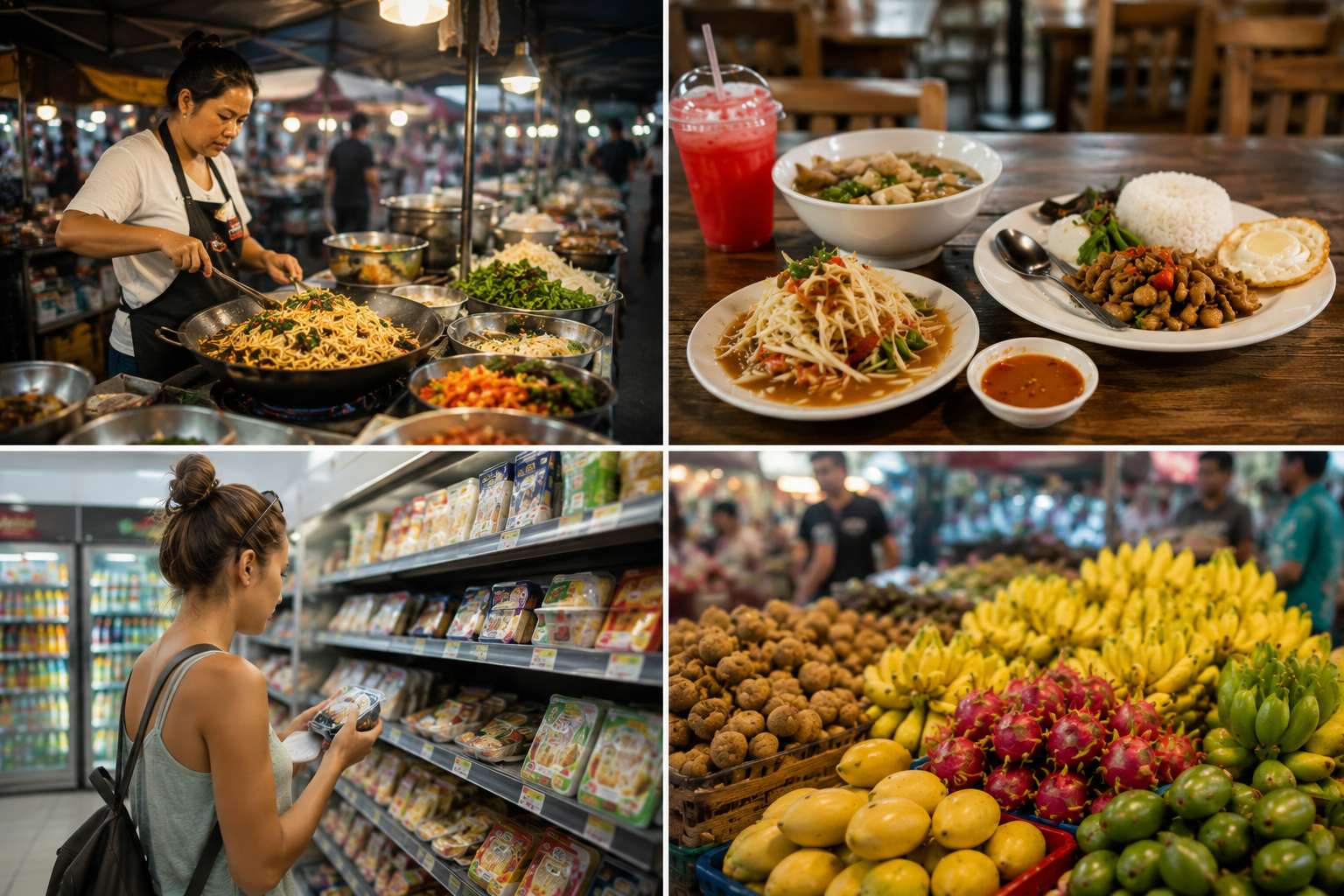
Night markets have long been one of the island's most interesting gastronomic attractions. For locals, it's a normal part of everyday life, and for tourists, it's an opportunity to experience Thailand's true street culture.
Here you can try grilled skewers, fried noodles, seafood dishes, fried rice, rolls, sushi, fruit cocktails, fresh fruits, traditional Thai desserts, and many other dishes.
One of the main advantages of markets remains the huge selection. Even if you are traveling with a large group, everyone will be able to find food to their taste.
In addition, visiting a market is not only dinner but also a kind of excursion. Here you can observe the cooking process, try unusual products, and feel the atmosphere of real Thailand.

Makashnitsy (Food Carts) — The Most Popular Thai Street Food
The famous Thai makashnitsy deserve special attention. These are mobile food carts that can be found almost all over the island.
For many tourists, makashnitsy are the first introduction to authentic Thai cuisine. Here they cook Pad Thai, fried rice, satay skewers, roti pancakes, soups, fresh fruits, smoothies, and many other popular dishes.
Prices at makashnitsy are usually among the lowest on the island. At the same time, the quality of the food is often very high, as products are purchased daily and dishes are prepared right in front of the customer.
The main rule for choosing is simple: look at the number of local customers. If there is a constant queue of Thais at a makashnitsa, the probability of getting delicious and fresh food is very high.
All-You-Can-Eat Mu Kata and Yakiniku Buffets
If you want more than just a meal, but a real gastronomic evening, you should pay attention to all-you-can-eat buffets.
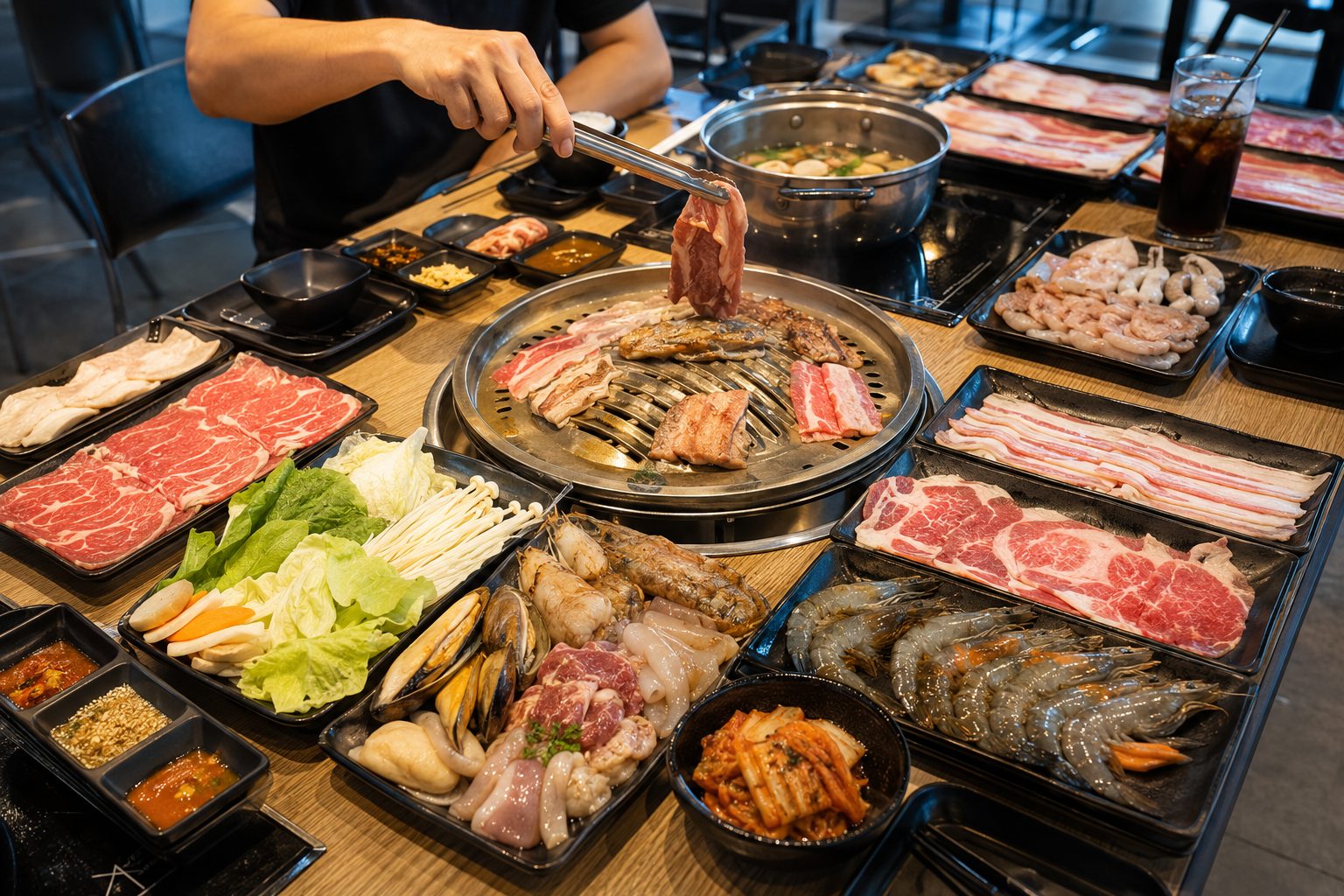
The most popular format among locals is Mu Kata. This is a kind of combination of grill and hot pot. In the center is a grill for meat, and along the edges is broth for cooking vegetables, noodles, and seafood. Visitors choose products themselves and cook them at the table.
Equally popular are Yakiniku-style restaurants, which originated in Japan. Here, guests grill various types of meat on built-in grills themselves. The price usually includes beef, pork, chicken, seafood, vegetables, salads, desserts, and drinks.
Most such establishments operate on an unlimited access system. After payment, you can take products an unlimited number of times within a set period.
Mu Kata and Yakiniku are extremely popular among locals, so there are often queues at popular establishments in the evenings.
7-Eleven Stores — A Lifesaver for Tourists
It's almost impossible to spend a vacation in Phuket and not visit a 7-Eleven at least once. These stores are open 24/7 and can be found literally every few hundred meters.
Many tourists use them not only to buy water and snacks but also for a full meal. The stores sell dozens of types of ready-made meals, which staff can heat up right at the checkout.
Here you can find chicken and rice, noodles, dumplings, burgers, sausages, instant soups, salads, desserts, and sandwiches. The signature hot cheese and ham toasts are especially popular and have long become an unofficial symbol of Thai 7-Elevens.
In addition to ready-made food, the stores offer a wide selection of coffee, dairy products, fruits, yogurts, and refreshing drinks.
How much does food cost at 7-Eleven?
Eating at 7-Eleven remains one of the most budget-friendly options on the island.
Hot toasts usually cost around 30–45 baht, ready meals with rice – from 40 to 80 baht, sausages – from 20 baht, coffee – from 30 baht, and a full meal rarely exceeds 100–150 baht per person.
Therefore, many tourists buy breakfast here before early excursions or dinner after a busy day.
Should You Be Afraid of Street Food?
Despite common concerns, street food in Phuket is a part of everyday life for millions of people. Thais themselves regularly buy food at markets and from food carts, so vendors are invested in the quality of their products.
It's best to choose stalls that always have customers. High turnover means that products don't sit around, and dishes are prepared with fresh ingredients.
In many cases, street food becomes the most vivid culinary experience of a vacation in Thailand.
How Much Can You Save on Food?
The difference between daily visits to tourist restaurants and eating at local establishments can be quite substantial.
If a family of three eats only in restaurants on the first line of popular beaches, expenses can easily reach several thousand baht per day. However, combining food courts, markets, food carts, and local cafes can reduce costs by several times.
Over a two-week vacation, savings can amount to tens of thousands of baht without any compromise in the quality of the holiday.
Where is the best place to eat in Phuket?
The most sensible option is to combine different dining formats. You can have breakfast at a cafe near your hotel or at 7-Eleven before an excursion, lunch at food courts or local cafes, and in the evening go to night markets or popular Mu Kata restaurants.
This approach will not only significantly reduce costs but also allow you to experience authentic Thai cuisine, which the island's residents themselves choose daily.
That is why many travelers who visit Phuket for the first time are increasingly moving away from tourist streets in search of small local establishments. Very often, that's where you'll find the most delicious dishes, the largest portions, and the most pleasant prices.